


You can have your eyes tested in a mall in ten minutes, and walk out with a prescription that is probably about right.
What you will not have had is a comprehensive eye examination.
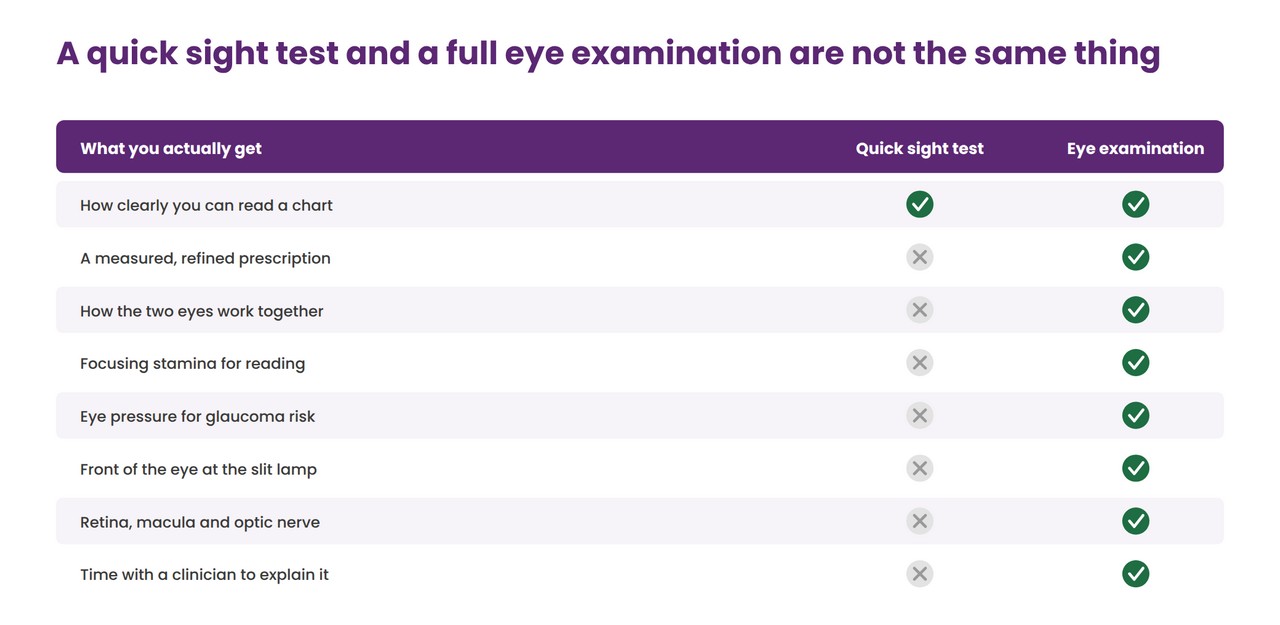
A sight test answers one question: what lens power makes the letters clear? An eye examination answers that, then keeps going – into how your eyes work together, the pressure inside them, the health of the front surface, and the retina and optic nerve at the back.
That second half is where conditions get found. It is also the half that gets skipped when appointments are booked in ten-minute slots.
What Makes a UK-Trained Optometrist Different?
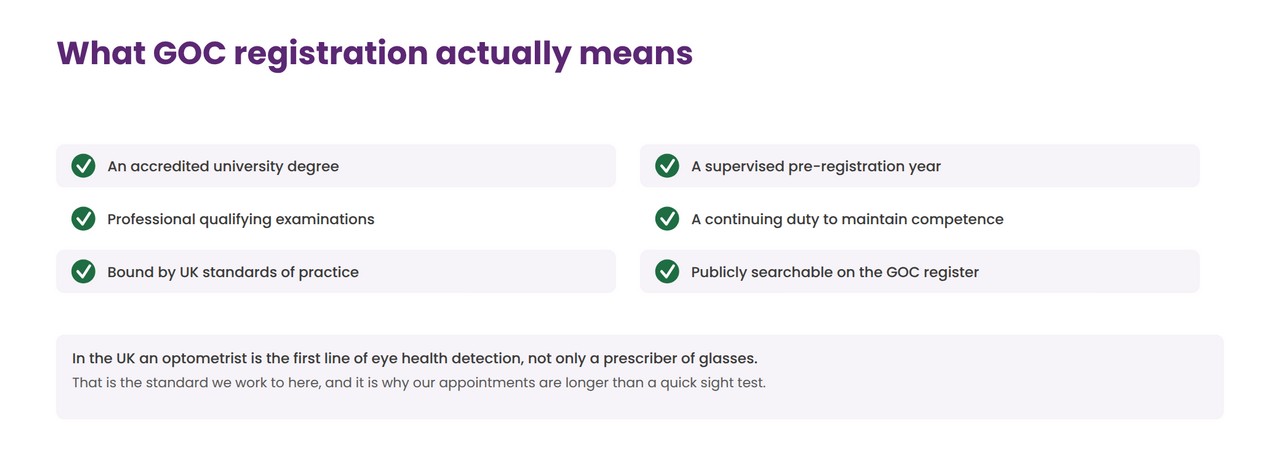
Our optometrists are qualified in the United Kingdom and are registered with the General Optical Council, the statutory regulator of the profession there.
The more important point is what the UK model asks an optometrist to be.
In the UK, optometrists are the first line of eye health detection. They are the people who find glaucoma, spot the retinal tear, and refer the suspicious optic disc. Prescribing glasses is part of the job, not the whole of it.
That is the standard we work to, and it shapes how long our appointments are and what happens in them.
What Is the Difference Between a Sight Test and a Comprehensive Eye Examination?
A child or an adult can pass a sight test comfortably and still have something that needs finding.
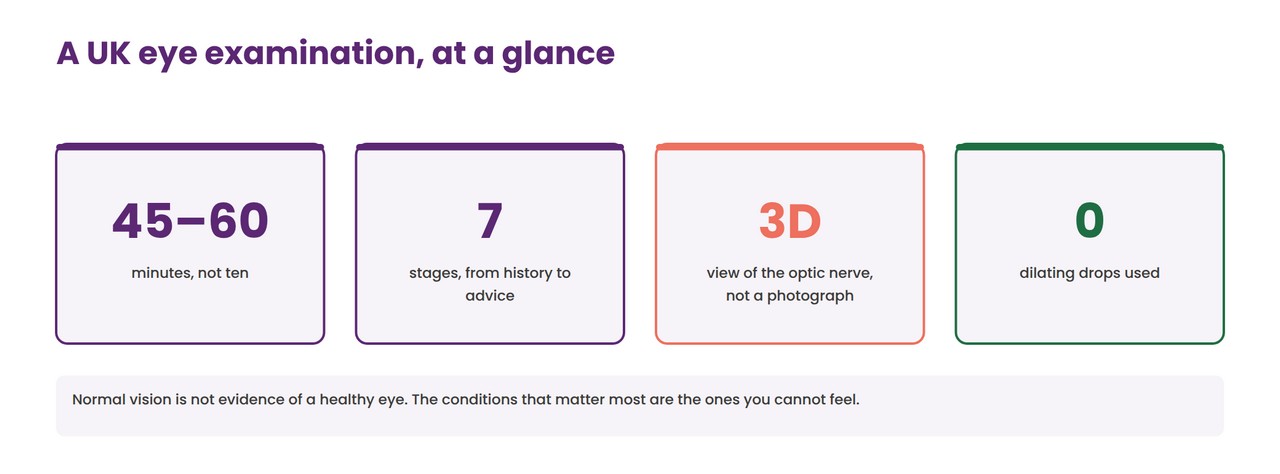
Normal vision is not evidence of a healthy eye.
What to Expect During Your Eye Examination
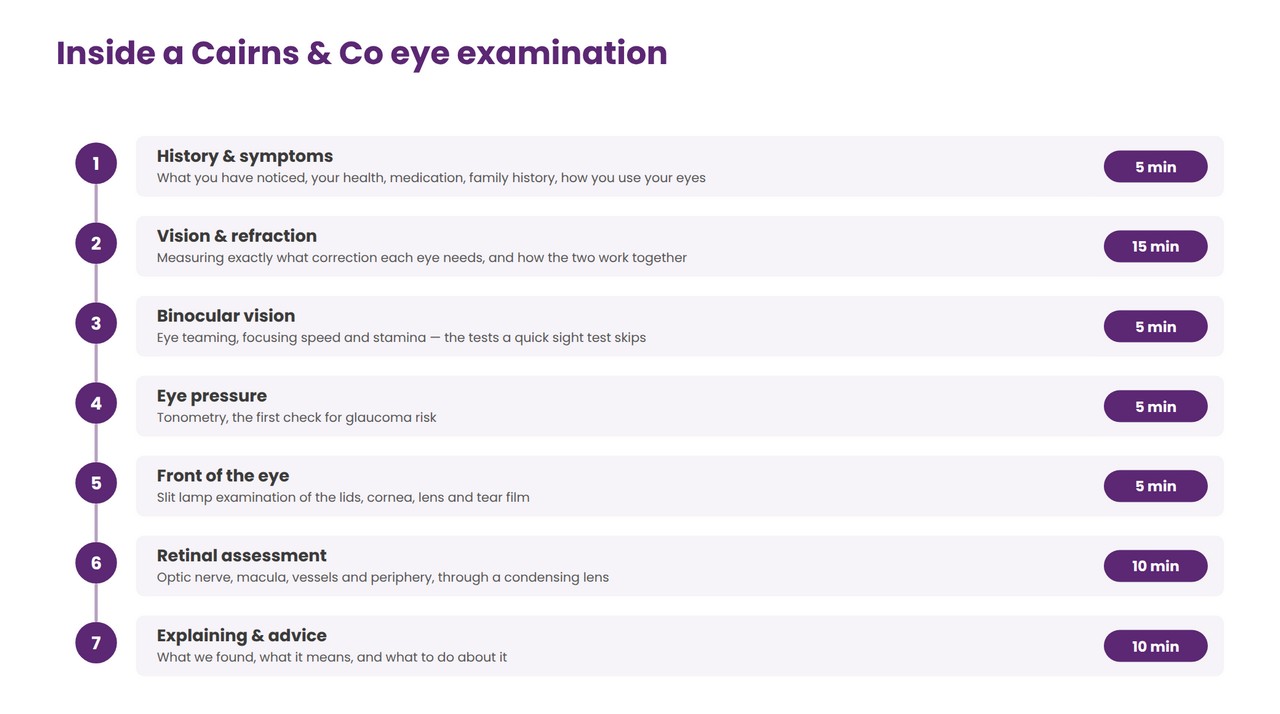
Forty-five to sixty minutes. This is where the time goes.
History and symptoms
Five minutes that shape everything after it. What you have noticed, how you use your eyes, your health, your medication, and what runs in your family.
A parent or sibling with glaucoma changes your own risk substantially. It is the single most useful question we ask.
Vision and refraction
Measuring precisely what correction each eye needs – done more carefully and more repeatedly than a rapid test allows.
See our explainer on short-sightedness, long-sightedness, astigmatism and presbyopia.
Binocular vision
How the two eyes work together, how quickly they change focus, and whether they can hold a near focus for the length of a page.
Weakness here is a common reason a child with a clear chart result still avoids reading – and a common reason an adult gets headaches at a screen.
Eye pressure
Tonometry, one of the checks for glaucoma.
Pressure alone does not diagnose it. What matters is pressure read alongside the optic nerve assessment further down this list – and if those two raise a question, we arrange visual field testing with a partner ophthalmologist. We do not have a field screener here.
The front of the eye
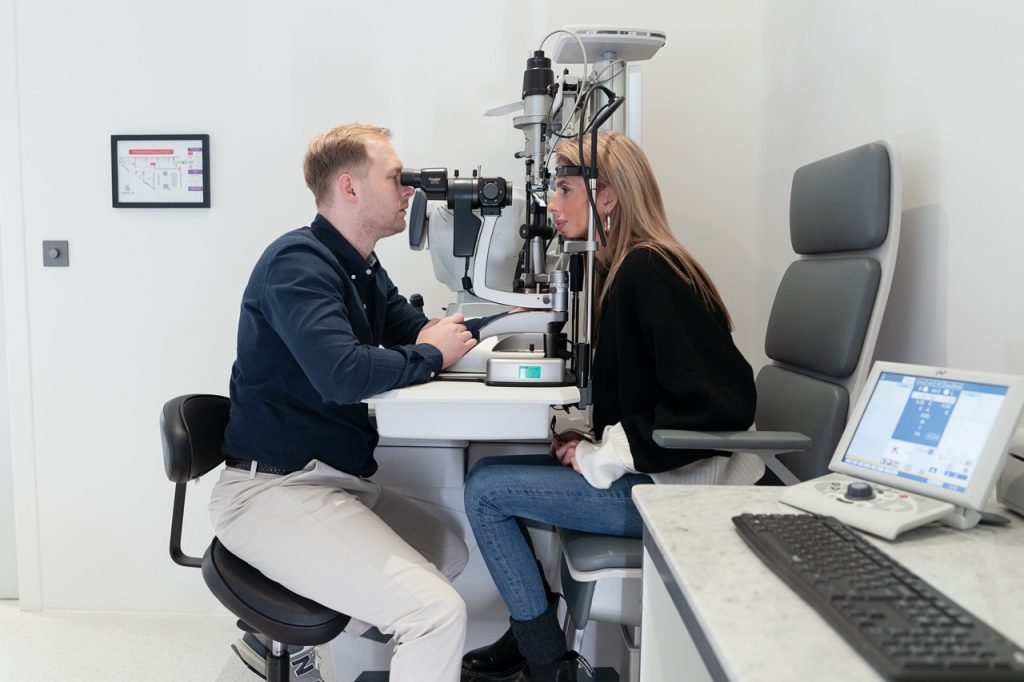
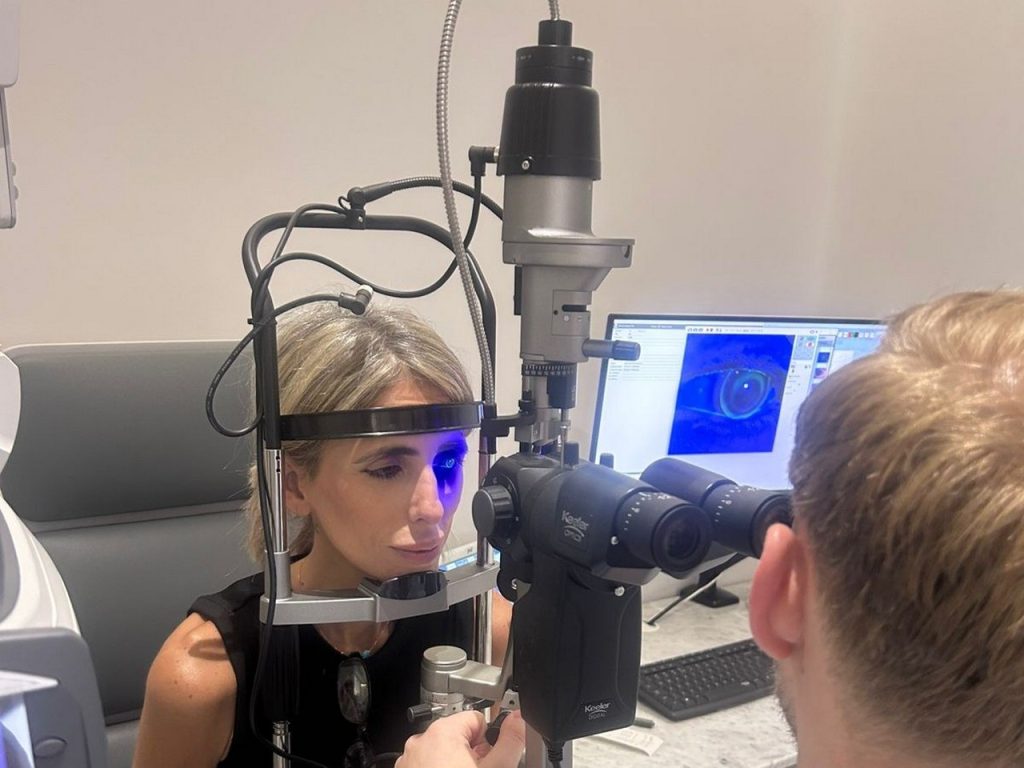
Slit lamp examination of the lids, lashes, tear film, cornea and lens. This is where dry eye, blepharitis, early cataract and corneal irregularity are found.
The retinal assessment
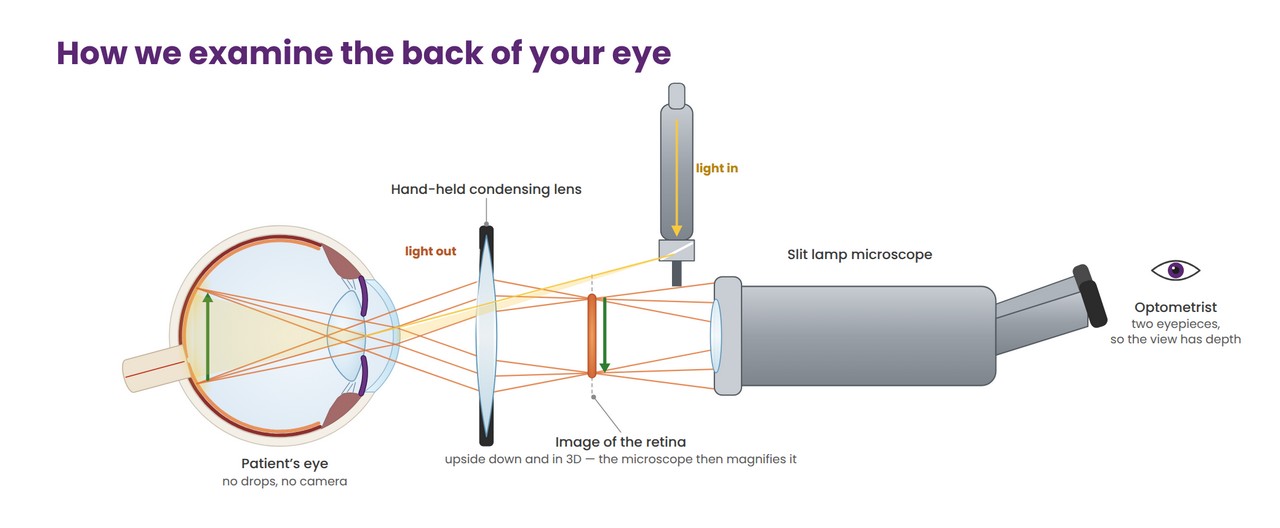
A magnified, three-dimensional view of the optic nerve, macula, blood vessels and retina through a hand-held condensing lens.
We do not use dilating drops, and we do not photograph the retina. This is a direct clinical examination, and where imaging is needed we refer.
Explaining what we found
Ten minutes at the end – the part patients tell us they have never had before.
What we found, what it means, what to do about it, and what to keep an eye on. If we found nothing, we say so and explain why the checks were still worth doing.
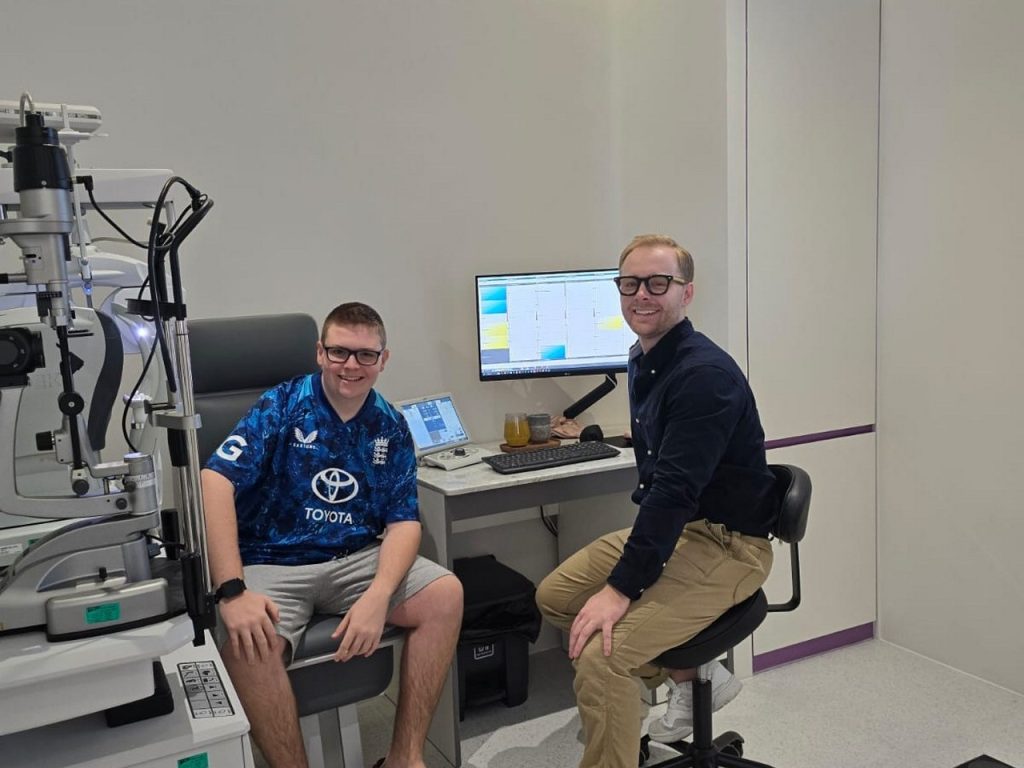
We sometimes find patients who have booked in for a routine eye examination or to update glasses can end up leaving with a referral to the ophthalmologist for further management or treatment.
What Eye Health Checks Are Important for Contact Lens Wearers?
There is a second reason the depth of the examination matters, and it is why many of our patients come to us in the first place.
Fitting specialist contact lenses – scleral, rigid, hybrid or custom soft – depends entirely on understanding the surface you are fitting to.
That is why we measure the cornea carefully rather than assuming its shape. A colour map of the whole surface is what tells you which lens will sit correctly, and it is what finds early keratoconus in someone whose only complaint is that their prescription keeps changing.
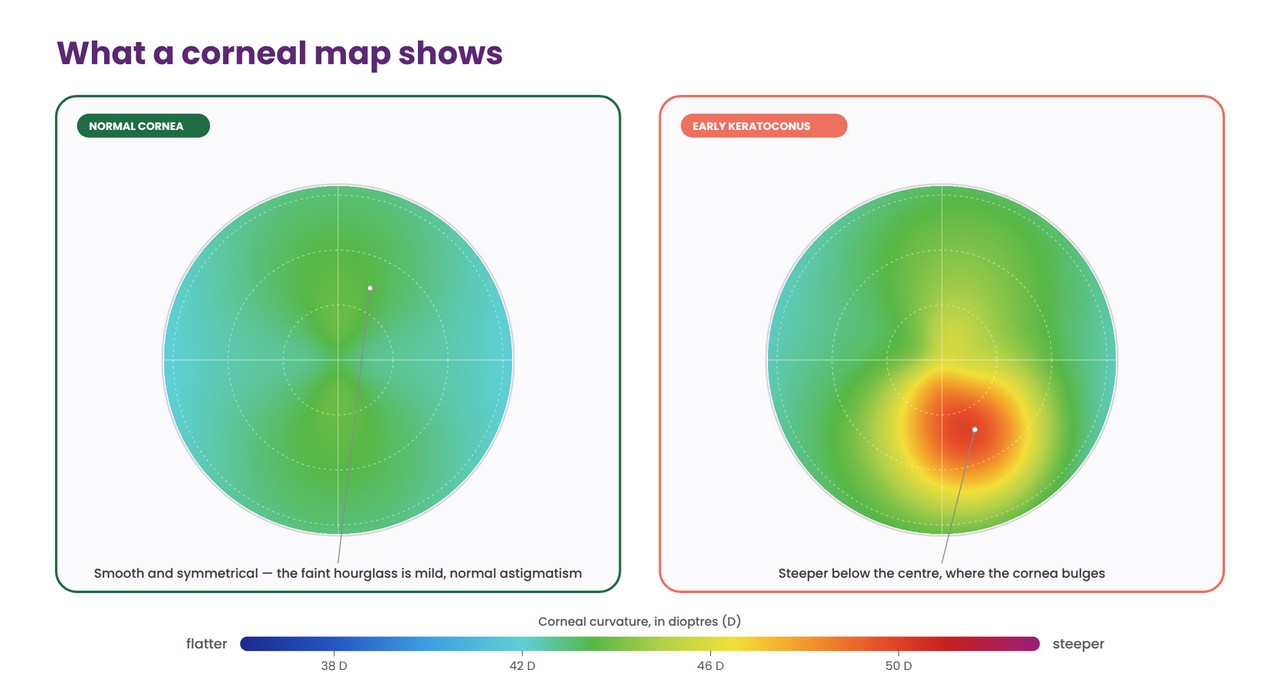
A contact lens fitting that starts from a careful examination of the cornea and tear film has a very different success rate from one that starts with a box of trial lenses.
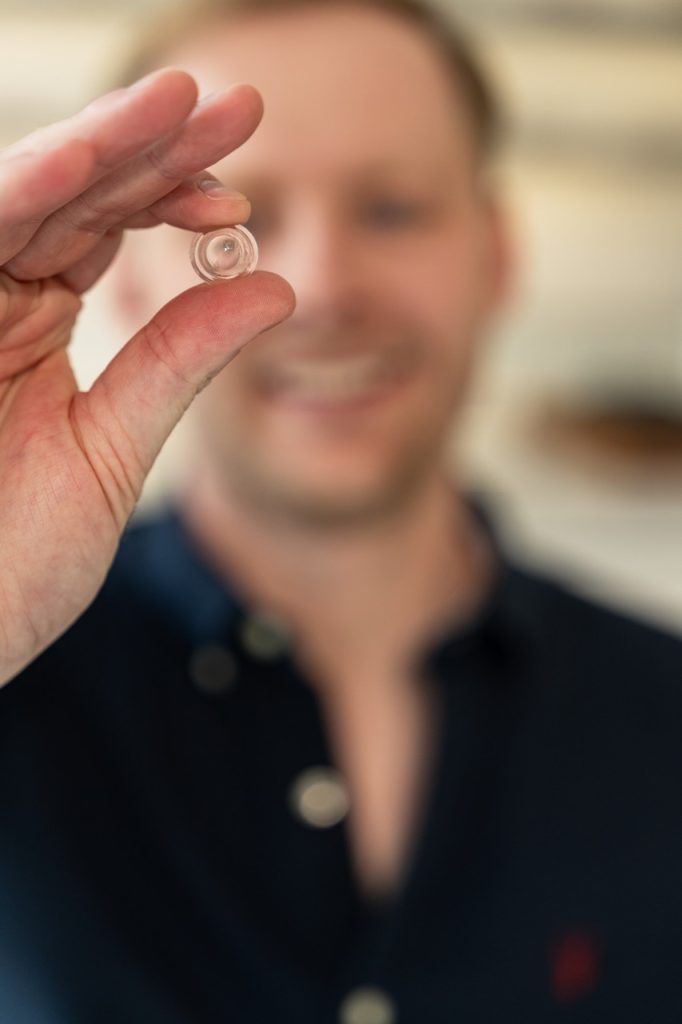
Patients arrive regularly having been told they cannot wear contact lenses. Usually it means the lens was wrong, not the eye.
Book a Full Eye Examination in Dubai
If it has been more than two years, or your last eye test took ten minutes, it is worth having a proper look. Book an appointment, read more about what your eye examination involves, or compare eye test centres and opticians in Dubai. Unfamiliar with a term? Our optical glossary explains it in plain English.
Frequently Asked Questions
How long does an eye examination take at Cairns & Co?
Between forty-five and sixty minutes. A quick sight test typically takes ten to fifteen. The extra time goes on binocular vision, eye pressure, the front of the eye and a full retinal assessment.
What does GOC registered mean?
The General Optical Council is the statutory regulator of optometrists in the United Kingdom. Registration means an accredited degree, professional examinations, and a continuing duty to UK standards of practice.
Is a UK eye examination different from a standard eye test in Dubai?
The difference is scope rather than nationality. In the UK, an optometrist is trained as the first line of eye health detection, not only as a prescriber of glasses. That is the model we work to here.
Do I need an eye examination if I can see perfectly well?
Yes. Glaucoma, early macular degeneration and diabetic changes are all silent in their early stages. Normal vision is not evidence of a healthy eye.
How often should I have one?
Every one to two years for most adults. Annually if you have diabetes, are over sixty, have a family history of glaucoma, or wear contact lenses.