

Eye tests in Dubai are widely available, but what many people do not realise is that the level of assessment can vary significantly between opticians and optometry centres. For patients, especially those new to the UAE, understanding these differences can help ensure their eyes are being properly assessed, not just their prescription.
At Cairns & Co (C&C), we regularly see patients who are surprised by how detailed their eye examination is compared to what they have experienced elsewhere. This blog aims to explain why that difference exists and what you should expect from a high-quality eye test in Dubai.
Eye Tests in Dubai Are Not All the Same
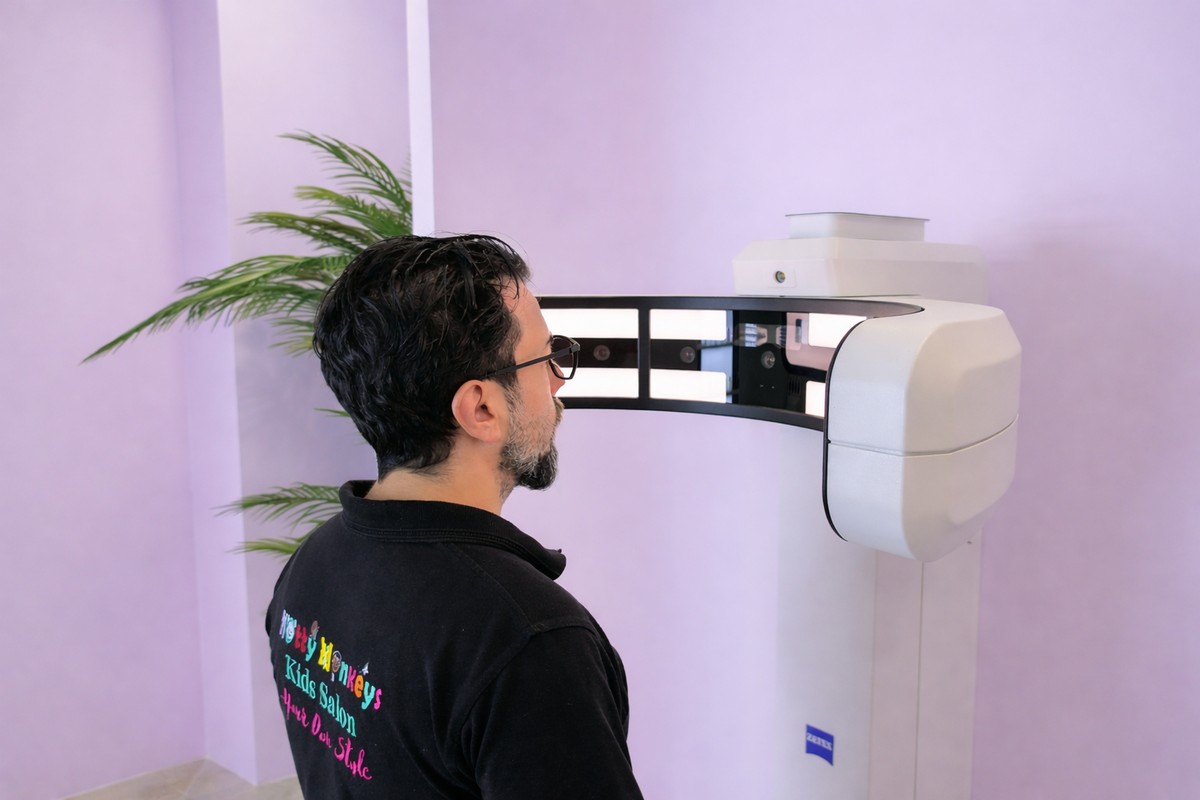
In Dubai, eye tests may be carried out in a variety of settings, including opticians and optometry centres. While all are regulated, the depth of examination often depends on training, equipment and clinical focus.
Some centres focus primarily on refraction, meaning checking your glasses prescription. Others, particularly specialist optometry centres in Dubai like C&C, place greater emphasis on eye health assessment, looking beyond whether you can see clearly on the chart.
This variation is important, as many eye conditions do not affect vision in their early stages.
The Role of UK-Trained Optometrists in Dubai
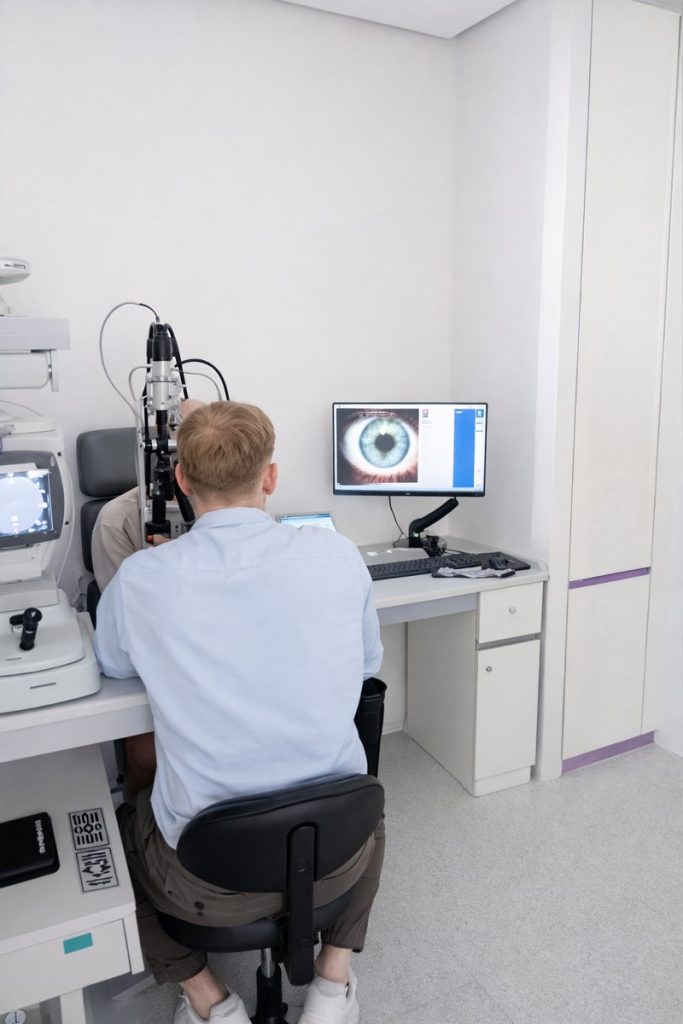
At Cairns & Co, all eye examinations are performed by UK-trained optometrists whose education places strong emphasis on clinical eye health, disease detection, and patient safety, not just prescribing glasses.
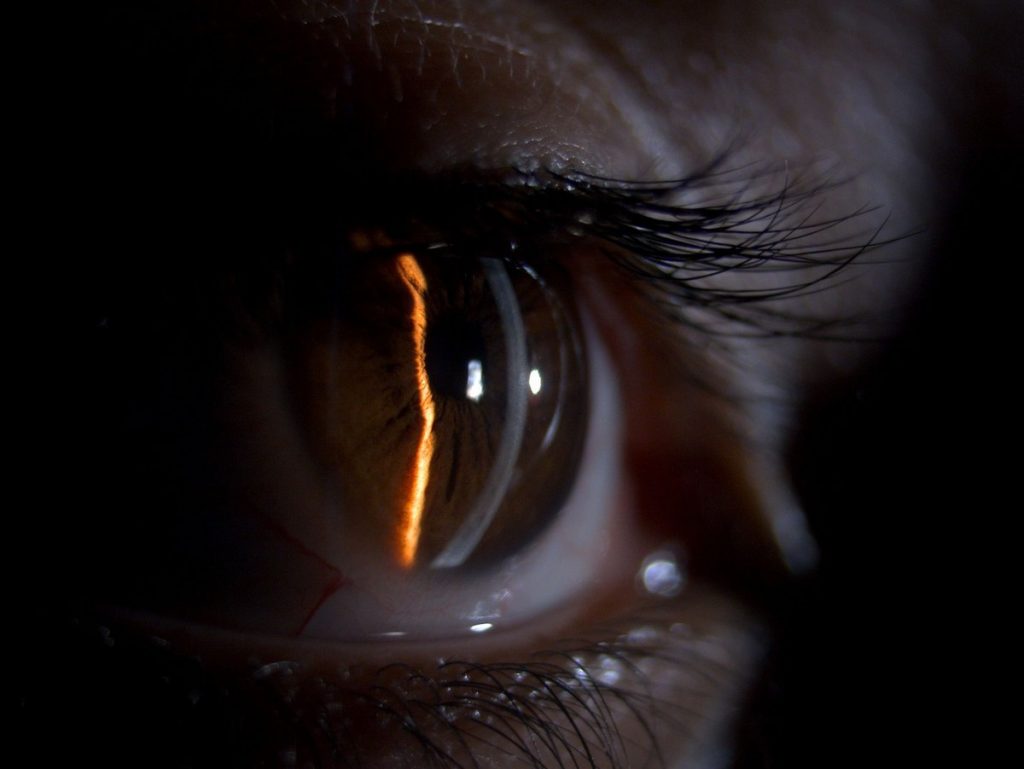
This background allows us to carefully assess both the front and internal structures of the eye, identifying early signs of conditions such as glaucoma, cataract, and macular degeneration, often before symptoms are noticed.
All eye examinations at our centre, including those for children, are carried out by UK-trained optometrists licensed by the Dubai Health Authority, with referral to ophthalmology whenever medical care is required.
Why the Slit Lamp Is So Important when doing an eye test
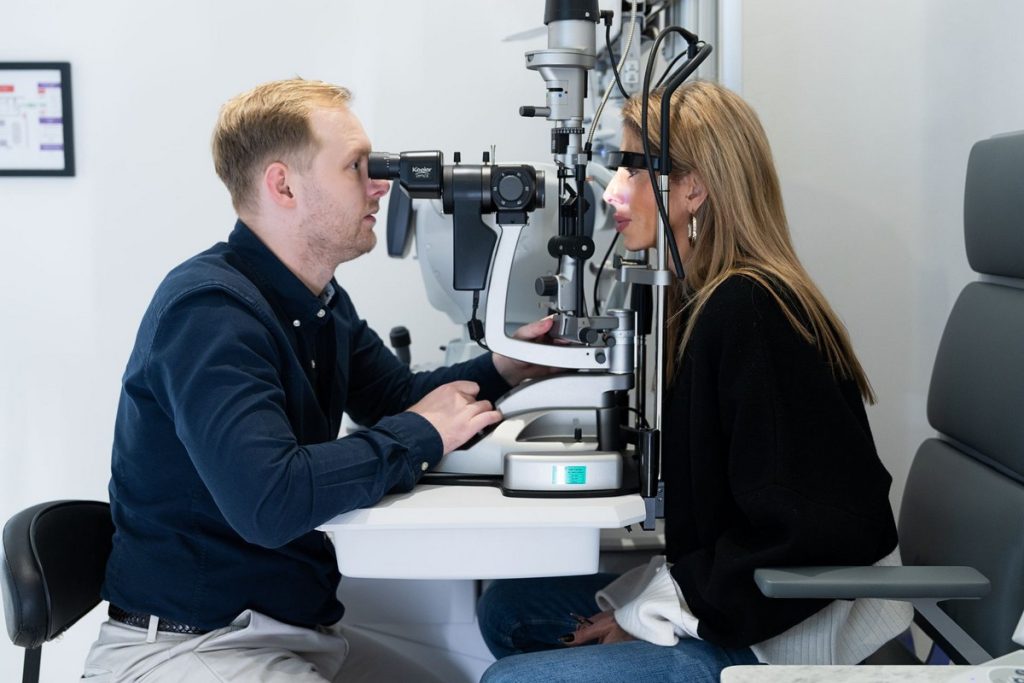
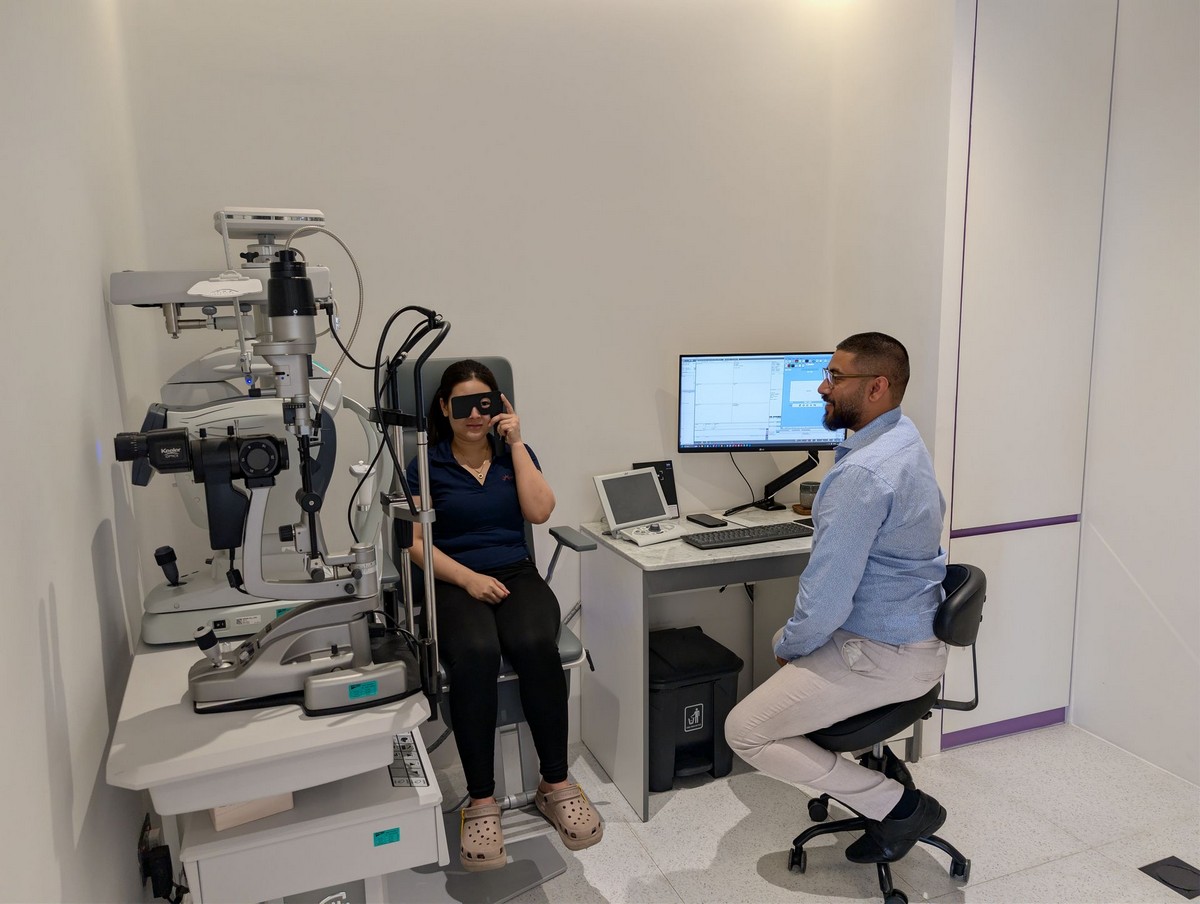
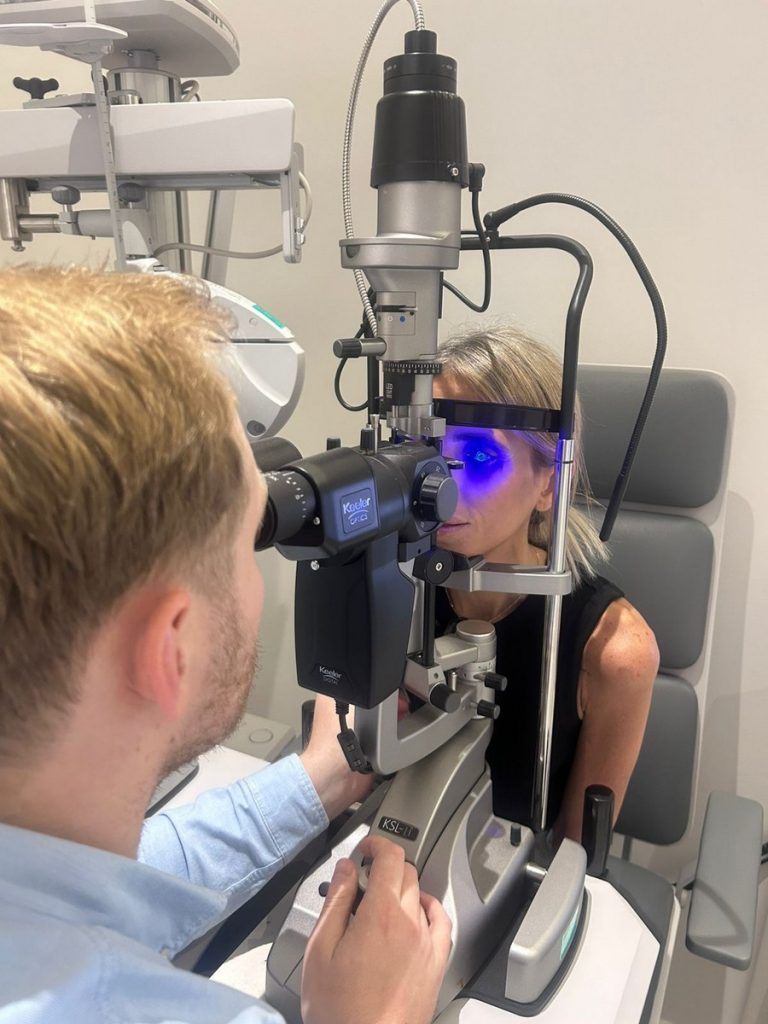
A slit lamp is a specialist microscope that allows the optometrist to examine the eye in high detail. Despite its importance, many opticians in Dubai do not routinely use a slit lamp during standard eye tests.
Using a slit lamp, we assess:
- Eyelids and lashes for conditions such as blepharitis
- The tear film and ocular surface
- The cornea and lens for early cataract changes
- The front of the eye for signs of inflammation or infection
This type of assessment is essential for detecting eye conditions early, often before symptoms are noticeable.
Detecting Common and Systemic Eye Conditions during an eye test
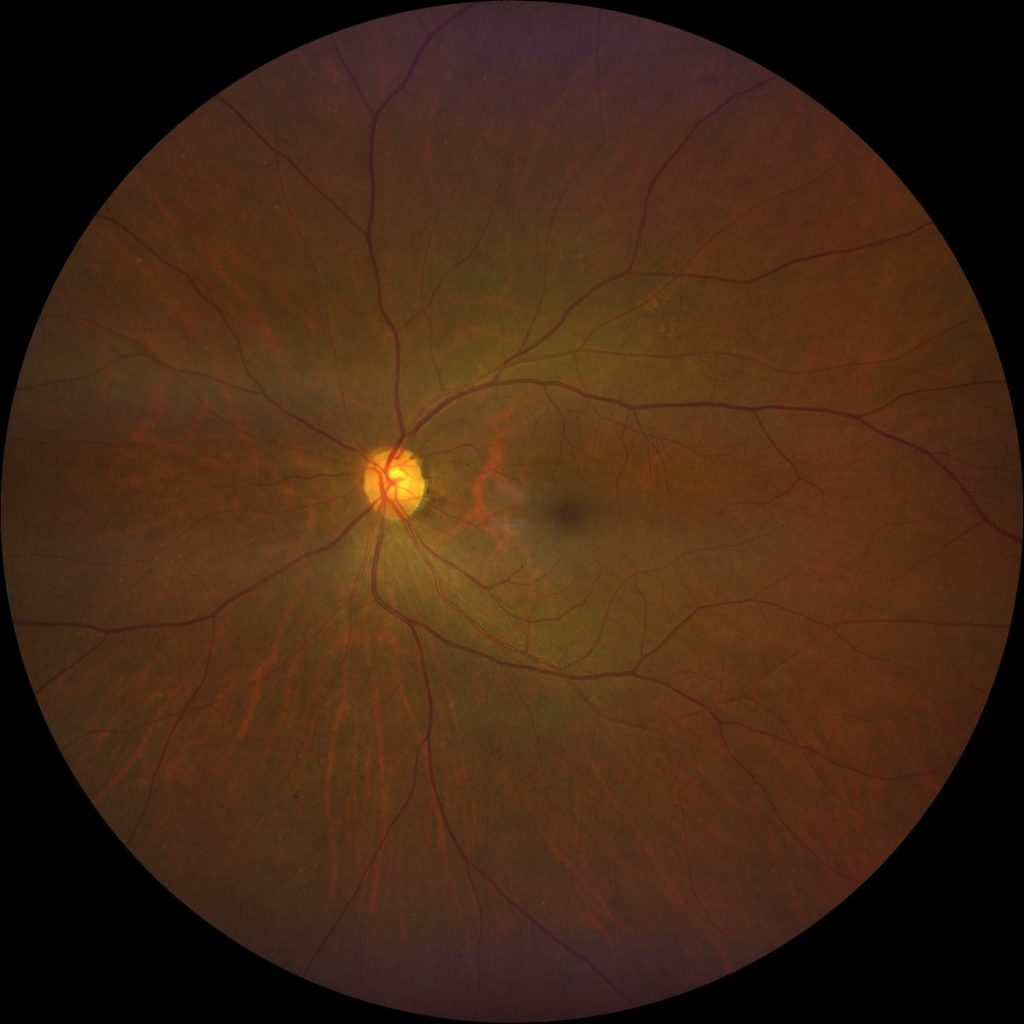
Many conditions can be identified during a routine examination, including:
- Blepharitis and dry eye disease
- Early cataracts
- Keratoconus
- Signs suggestive of glaucoma
- Changes that may be associated with diabetes or hypertension
Many conditions can be identified during a routine examination, including:
- Blepharitis and dry eye disease
- Early cataracts
- Keratoconus
- Signs suggestive of glaucoma
- Changes that may be associated with diabetes or hypertension
Children and Eye Tests in Dubai Clinics
Many opticians and centres in Dubai choose not to examine children below the age of 10, 12, or even 14. This is not due to official guidance, but rather differences in training, confidence and equipment.
With a UK training background, our optometrists are trained to examine children as part of routine practise. At Cairns & Co, we welcome children and assess vision development, eye health and visual comfort in an age-appropriate and supportive way.

The Varying Levels of Optometry in Dubai
Dubai offers a wide range of eye care options, from quick prescription checks to highly detailed clinical assessments. Understanding this variation empowers patients to make informed decisions about their eye health.
A longer, more thorough eye test is not about complexity for the sake of it. It is about detecting problems early, protecting long-term vision and tailoring care to the individual.

Final Thoughts
This approach reflects how optometry is practised in the UK and other healthcare-led systems. Understanding who is examining your eyes, how they are trained and what equipment is used can make a meaningful difference to your long-term eye health.
If you are unsure about the level of care you are currently receiving, or simply want reassurance that your eyes are being properly assessed, Cairns & Co can provide clarity and peace of mind.
FAQS
Do all eye test centres in Dubai provide the same level of examination?
No. The level of eye examination can vary between opticians and optometry centres. Some focus mainly on checking your glasses prescription, while others provide a more detailed eye health assessment delivered by optometrists with specialist clinical training.
Is a slit lamp really necessary during an eye test?
Yes. A slit lamp is a microscope used to examine eye health in detail. Without it, early signs of conditions such as blepharitis or cataract may be missed. Not all centres routinely use one.
Can an eye test detect health problems beyond my vision?
Yes. A comprehensive eye examination can identify signs of eye conditions such as glaucoma or cataract, as well as changes that may be linked to systemic conditions like diabetes or high blood pressure.
Are children allowed to have eye tests in opticians or optometry centres in Dubai?
There is no official age restriction for children having eye tests in Dubai. Many centres choose not to examine younger children due to training or experience. At Cairns & Co, our UK-trained optometrists routinely examine children as part of standard practice.
Who carries out eye examinations at Cairns & Co?
All eye examinations at Cairns & Co, including for children, are carried out by UK-trained optometrists licensed by the Dubai Health Authority, with referral to ophthalmology whenever medical care is required.