

Diabetic Retinopathy Screening
Diabetic Retinopathy Screening at Cairns & Co
Diabetic retinopathy screening is a key part of our comprehensive eye evaluations.
If any problems or changes are identified during the evaluation, our team of UK optometrists will ensure correct referral to one of our partner ophthalmologists who specialises in this condition.
What is Diabetic Retinopathy?
Diabetic retinopathy occurs when high blood sugar levels from diabetes damage the blood vessels at the back of your eye. This can lead to vision problems and blindness if left untreated.
Risk factors include:
- Long-term diabetes
- Poor blood sugar control
- High blood pressure
- High cholesterol
- Smoking
We offer these advanced screening tests as standard. This ensures early detection and effective management if identified.
Ongoing Monitoring
If diagnosed with diabetes or at high risk, we recommend bi-annual (6 month) evaluations to ensure your eyes and vision remain as healthy as possible.
We examine the retina carefully at every visit and refer promptly to a partner ophthalmologist when we find changes, supporting early detection and management of diabetic retinopathy. Our comprehensive approach provides peace of mind and the best outcomes for your eye health
Diabetic Retinopathy Screening in Dubai
Diabetic Retinopathy Screening at Cairns & Co
Diabetic retinopathy screening is a key part of our comprehensive eye examinations in Dubai. Our UK-trained optometrists assess your vision and examine the health of your eyes, including the retina and the optic nerve.
If any problems or changes are identified during the examination, we will arrange the correct referral to one of our partner ophthalmologists who specialises in this condition.
What is Diabetic Retinopathy?
Diabetic retinopathy occurs when high blood sugar levels from diabetes damage the tiny blood vessels in the retina at the back of the eye. It is a serious form of diabetic eye disease that can lead to vision loss and blindness if left untreated.
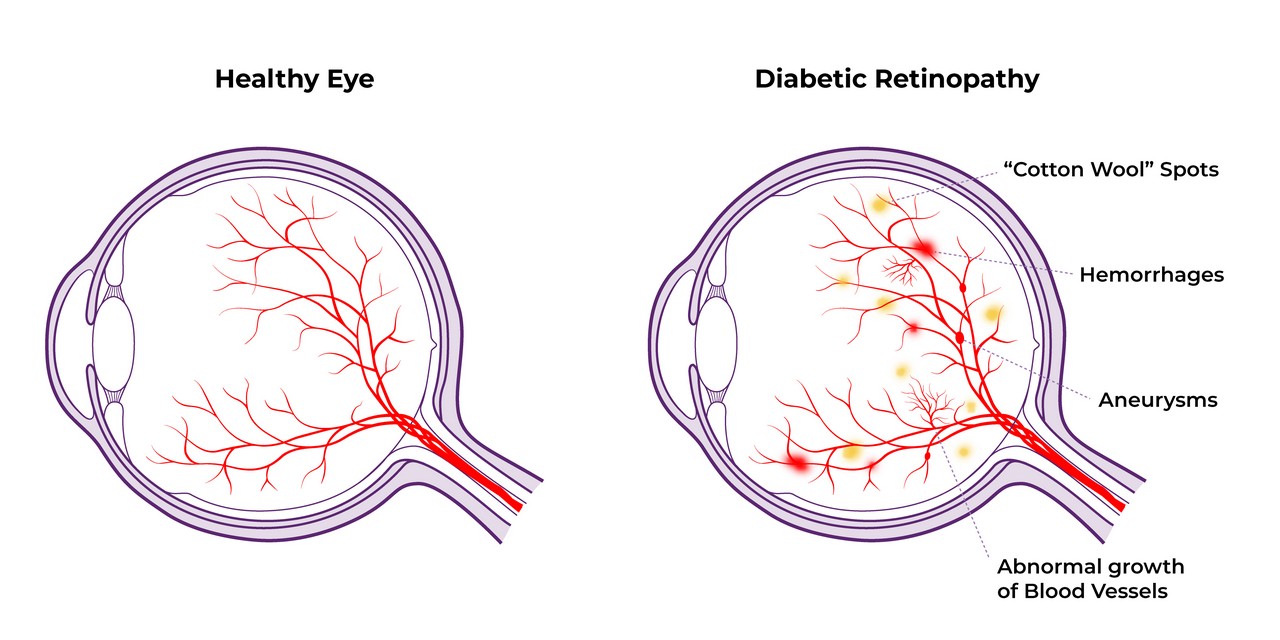
Key facts
- If you have diabetes or are at high risk, regular eye examinations matter — including a dilated eye examination with an ophthalmologist
- The early stage, non-proliferative diabetic retinopathy (NPDR), often causes no symptoms at all
- As damage progresses, you may notice blurred vision, floaters or other changes to your sight
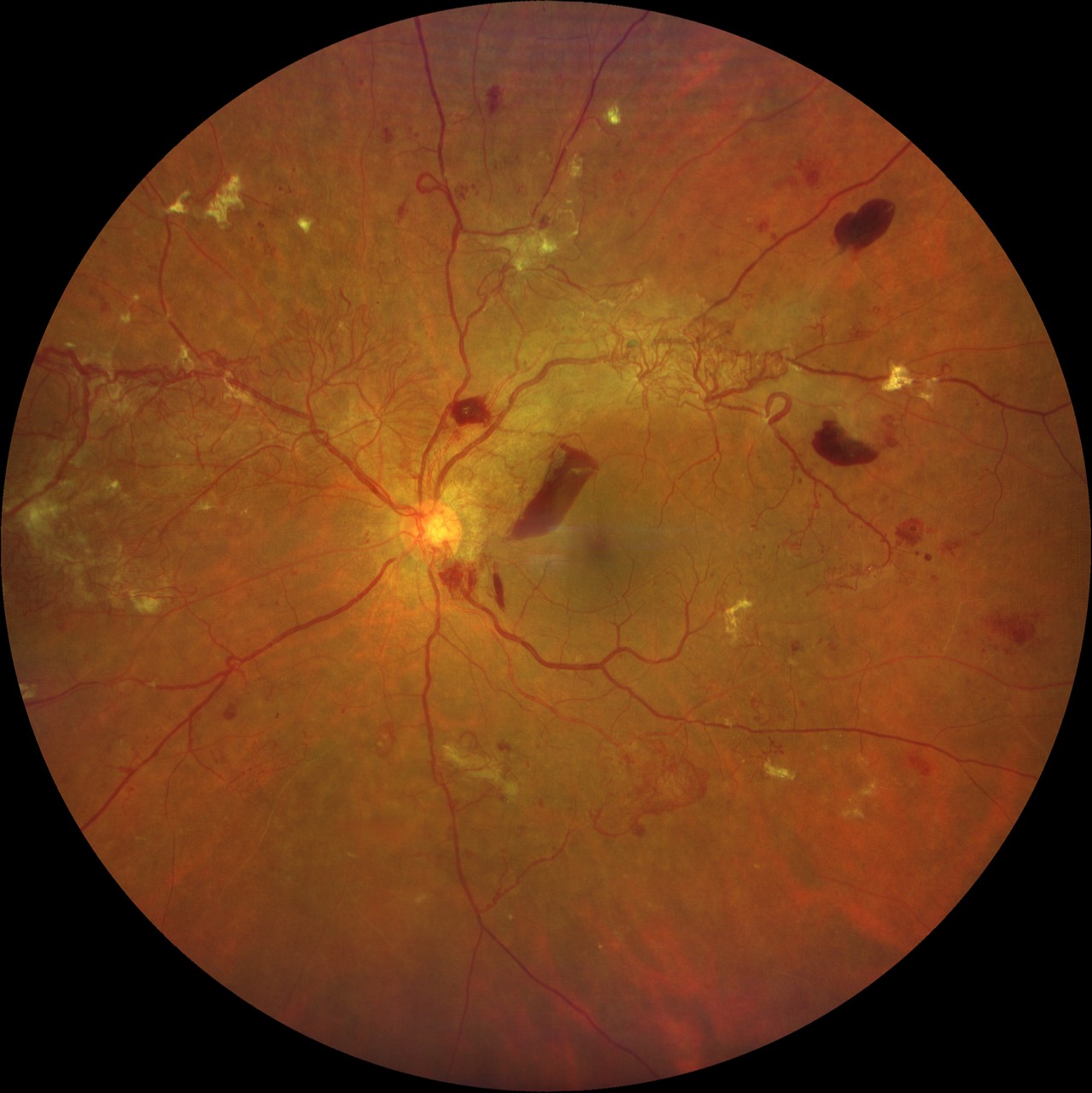
- The advanced stage, proliferative diabetic retinopathy (PDR), involves abnormal new blood vessels growing on the retina, which can bleed, form scar tissue and threaten sight
- Diabetic macular oedema (DME) can occur in both NPDR and PDR, and affects central vision
Where treatment is needed, it is provided by an ophthalmologist and may include laser treatment to help preserve central vision, anti-VEGF injections or steroid medication to reduce swelling, and vitrectomy to remove blood and scar tissue. Good blood sugar control remains central to protecting your sight at every stage.
Risk Factors for People with Diabetes
About 1 in 3 people with diabetes over the age of 40 already show some signs of retinopathy, making it one of the most common diabetic eye problems among working-age adults. (Source: National Institute of Diabetes and Digestive and Kidney Diseases.)
- Long-term diabetes — the longer you live with diabetes, the more likely you are to develop diabetic eye disease
- Poor blood sugar control — high blood glucose damages the small vessels in the retina, so managing diabetes is essential
- High blood pressure — keeping blood pressure in a healthy range helps protect the eyes
- High cholesterol — a recognised risk factor for diabetic retinopathy
- Gestational diabetes — can increase risk, especially alongside pre-existing diabetes
- Ethnicity — some groups, including those of African and South Asian descent, carry a higher risk
- Smoking — a modifiable risk factor that worsens outcomes
What Happens During Your Screening
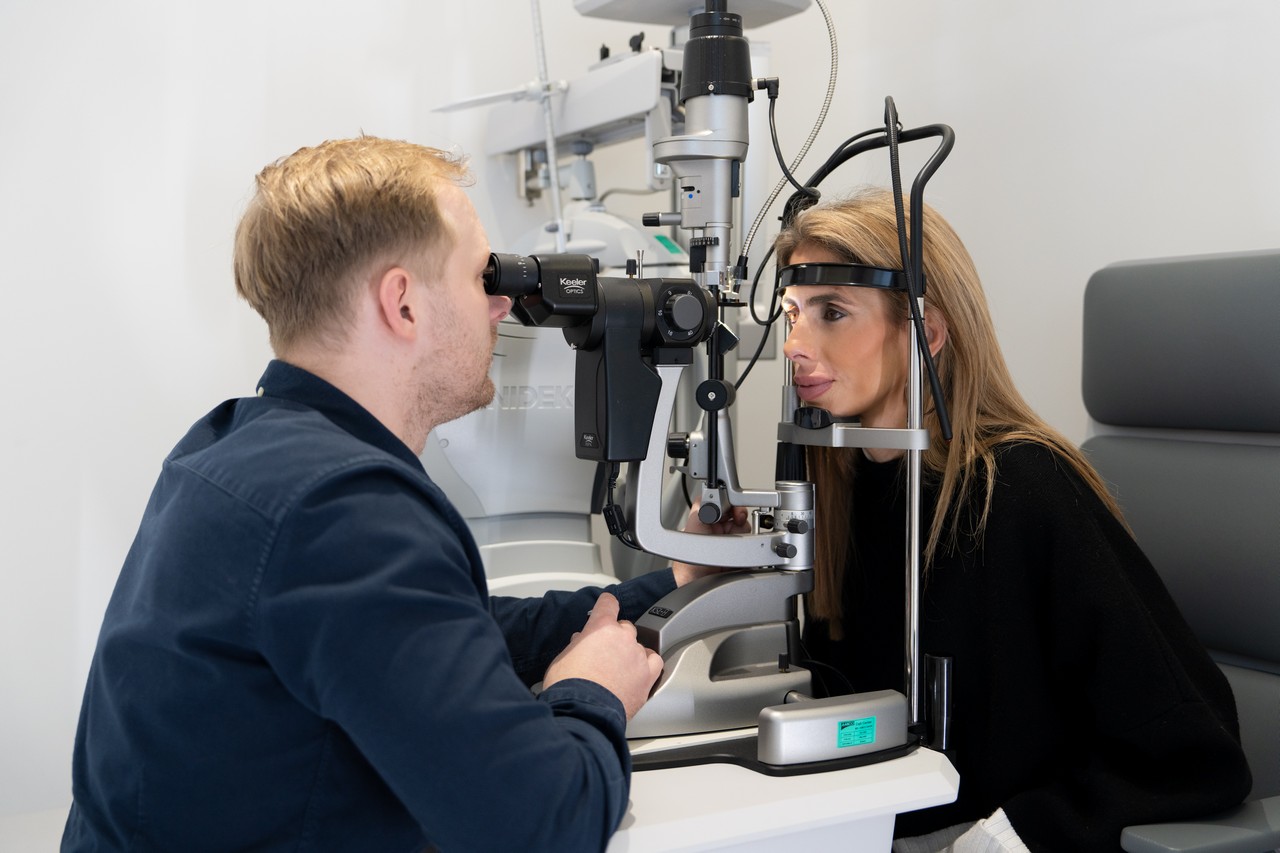
Screening at Cairns & Co takes place as part of a comprehensive eye examination. It is straightforward, comfortable and requires no special preparation.
- A full assessment of your vision and prescription
- An examination of the health of your eyes, including the retina and optic nerve
- A discussion of your diabetes, general health and any changes you have noticed
- Clear advice on your results and what they mean for you
- Referral to one of our partner ophthalmologists for a dilated eye examination and any further imaging, where this is needed
Ongoing Monitoring to Protect Your Sight
Diabetic retinopathy often causes no symptoms in its early stages, so regular monitoring is the most effective way to catch changes before they affect your vision.
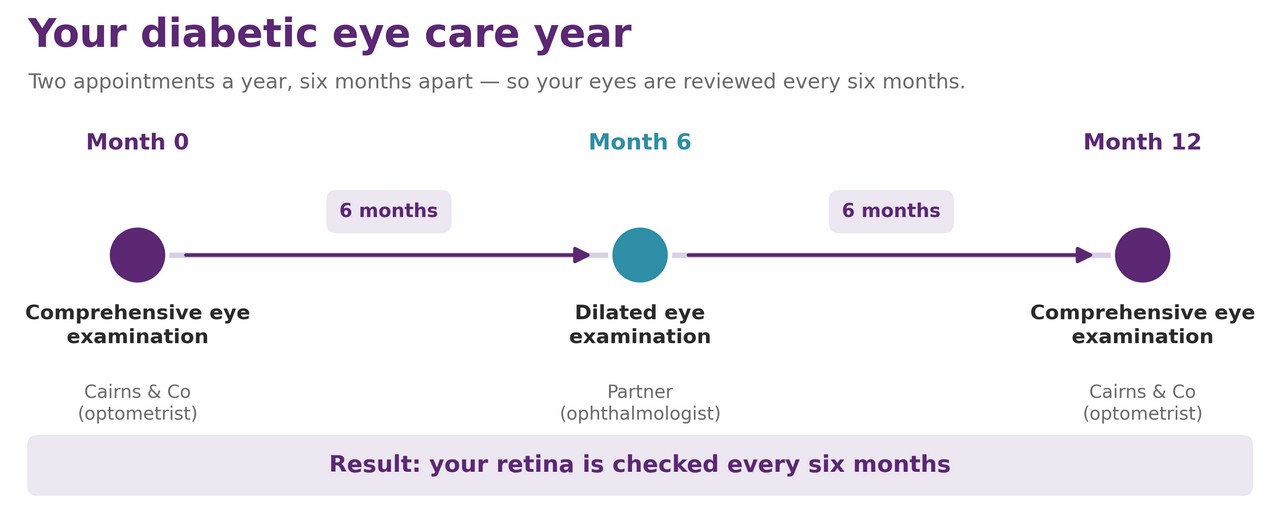
If you have diabetes or are at high risk, we recommend a comprehensive eye examination with our optometrists once a year, and a dilated eye examination with an ophthalmologist once a year — with the two appointments spaced six months apart. This way, your eyes are reviewed every six months.
- A dilated eye examination can detect problems before vision changes or permanent vision loss occur
- The National Eye Institute reports that early detection and treatment can reduce the risk of blindness by up to 95%
- Controlling blood sugar can improve diabetic retinopathy outcomes, and where needed an ophthalmologist can treat leaking blood vessels in the retina
Our aim is to give you clarity and peace of mind at every visit — and to make sure the right care reaches you at the right time.
FAQs
Where can I get diabetic retinopathy screening in Dubai?
Cairns & Co offers diabetic retinopathy screening as part of a comprehensive eye examination, carried out by UK-trained optometrists, with referral to partner ophthalmologists if further testing or treatment is needed.
How often should diabetics have an eye screening in Dubai?
We recommend a comprehensive eye examination with our optometrists once a year, and a dilated eye examination with an ophthalmologist once a year, spaced six months apart. This means your eyes are reviewed every six months, which matters because early-stage retinopathy often has no visible symptoms.
What happens during a diabetic retinopathy screening at Cairns & Co?
Our optometrists assess your vision and examine the health of your eyes, including the retina and optic nerve, as part of a comprehensive eye examination. If we identify any changes, we refer you to one of our partner ophthalmologists.
Do you use dilating eye drops or perform OCT scans?
No. Screening at Cairns & Co is non-invasive and does not involve dilating eye drops or OCT imaging. Where a dilated eye examination or further imaging is needed, we refer you to one of our partner ophthalmologists.
Is diabetic retinopathy screening covered by health insurance in the UAE?
Coverage depends on your individual insurance provider and policy. We recommend checking with your insurer directly, or contacting our team, who can help confirm your coverage before your appointment.
What are the early signs of diabetic retinopathy?
In its early stage, diabetic retinopathy often has no symptoms at all. As it progresses, you may notice blurred vision, floaters, or difficulty seeing at night, which is why routine screening matters more than waiting for symptoms.
Is diabetic retinopathy screening painful or does it require preparation?
No. Screening at Cairns & Co is non-invasive and needs no special preparation. A dilated eye examination with an ophthalmologist does involve eye drops, which can cause temporary light sensitivity and slightly blurred near vision for a few hours, so we recommend arranging transport home for that appointment.
Can diabetic retinopathy be treated if caught early?
Yes. Early detection allows for effective management through blood sugar control, and where needed, treatments such as laser therapy, anti-VEGF injections or steroid medication delivered by an ophthalmologist to preserve vision before permanent damage occurs.
Do I need a referral to book a diabetic eye screening at Cairns & Co?
No referral is needed. You can book a comprehensive eye examination directly with our team, and if any signs of diabetic retinopathy are found, we will refer you to one of our partner ophthalmologists for further care