


Keratoconus is usually found late, and the reason is simple: every early symptom looks exactly like needing new glasses.
The prescription changes. The astigmatism climbs. Night driving gets harder. So you get stronger lenses, and six months later you need stronger ones again.
The good news is that keratoconus is manageable, and most people see well with the right lens. The thing that matters is finding it early enough.
What Is Keratoconus?
The cornea is the clear front window of the eye. Normally, it is a smooth, evenly curved dome.
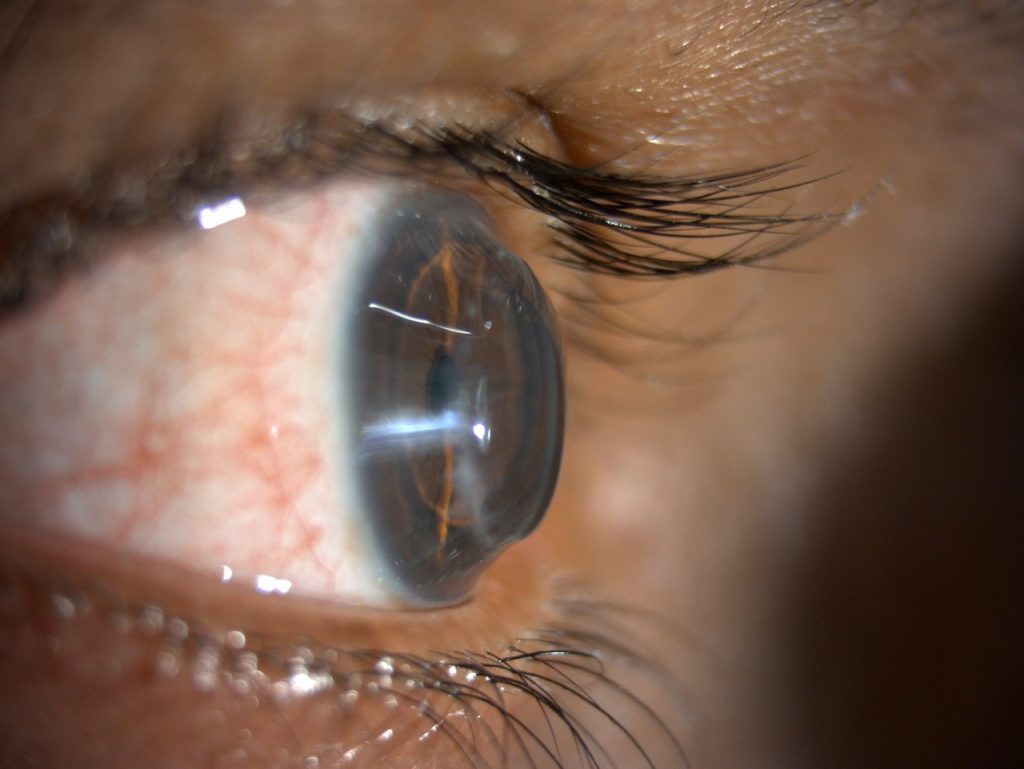
In keratoconus, it thins progressively and bulges forward into a cone. Light entering the eye is scattered and distorted rather than focused, and no spectacle lens can fully correct an irregular surface.
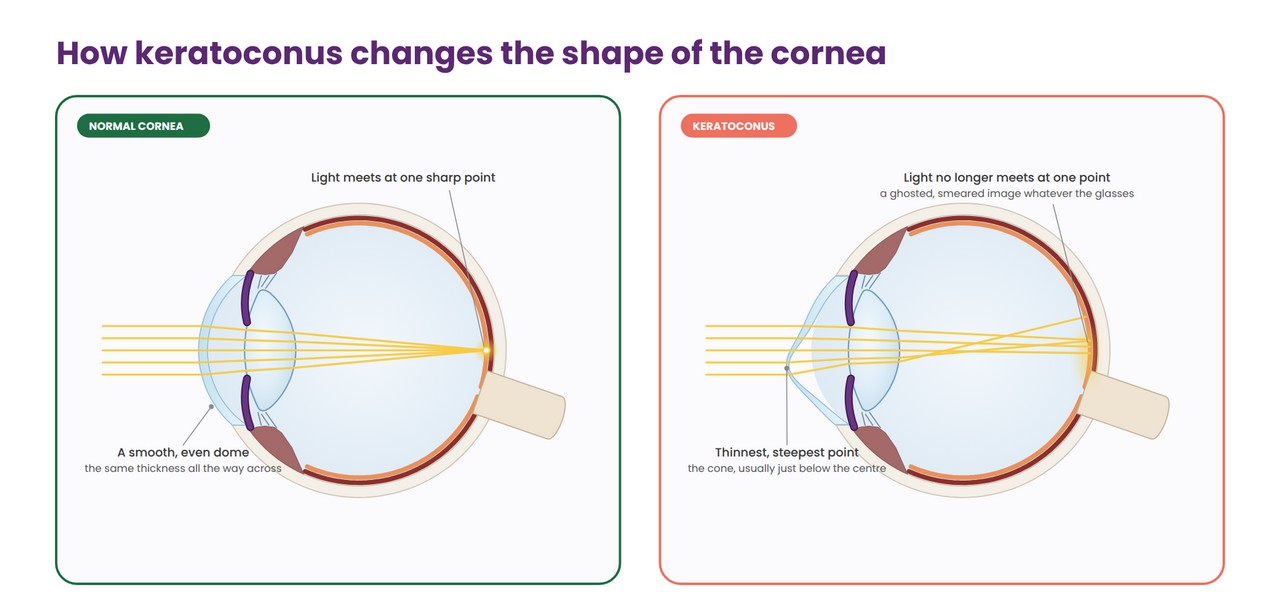
It usually starts in the teens or twenties and often continues to progress into the thirties, then tends to stabilize.
It commonly affects both eyes, but rarely equally.
Early Signs and Symptoms of Keratoconus
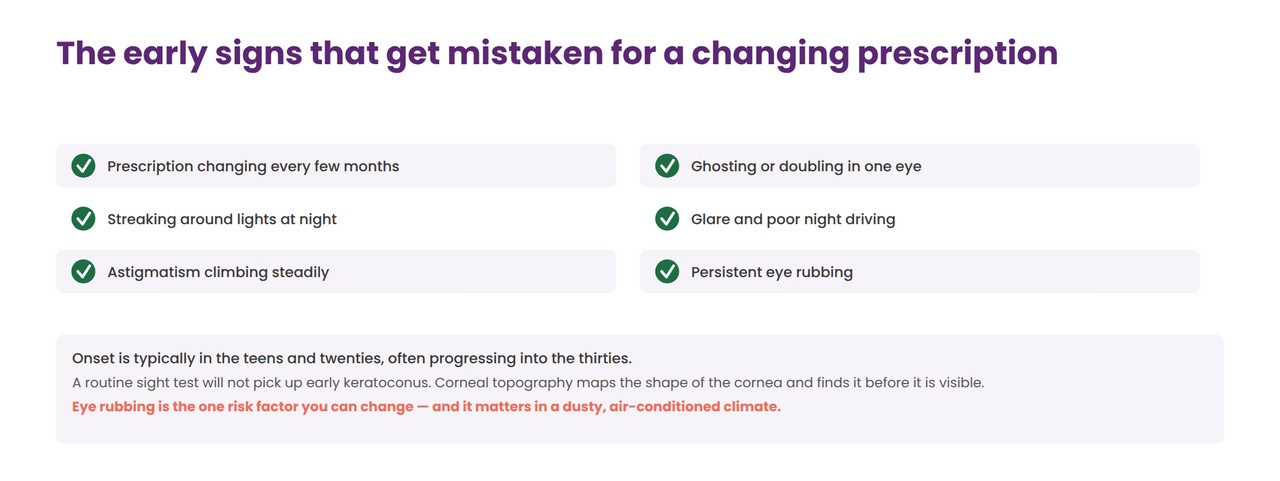
The pattern that should raise suspicion is a prescription that keeps changing, with astigmatism rising, in a young person.
Ghosting or doubling in one eye – seeing a faint second image next to the first – is particularly characteristic. So is streaking around headlights and streetlights at night.
The eye-rubbing link
Persistent, forceful eye rubbing is strongly associated with keratoconus and with its progression. It is the one risk factor you can actually change.
That matters here. Dust, sand and air conditioning drive allergic eye disease, and allergic eye disease drives rubbing.
If your eyes itch, treating the allergy properly is part of protecting the cornea – not a separate issue.

How It Is Diagnosed
This is where a specialist appointment differs from a routine sight test, and it is worth being blunt: a quick sight test in a mall optician will not pick up early keratoconus.
Corneal topography maps the shape and curvature of the cornea across its whole surface and produces a colour map.
Early keratoconus shows as a characteristic pattern of steepening long before anything is visible to the naked eye, or is explained as “difficult astigmatism”.
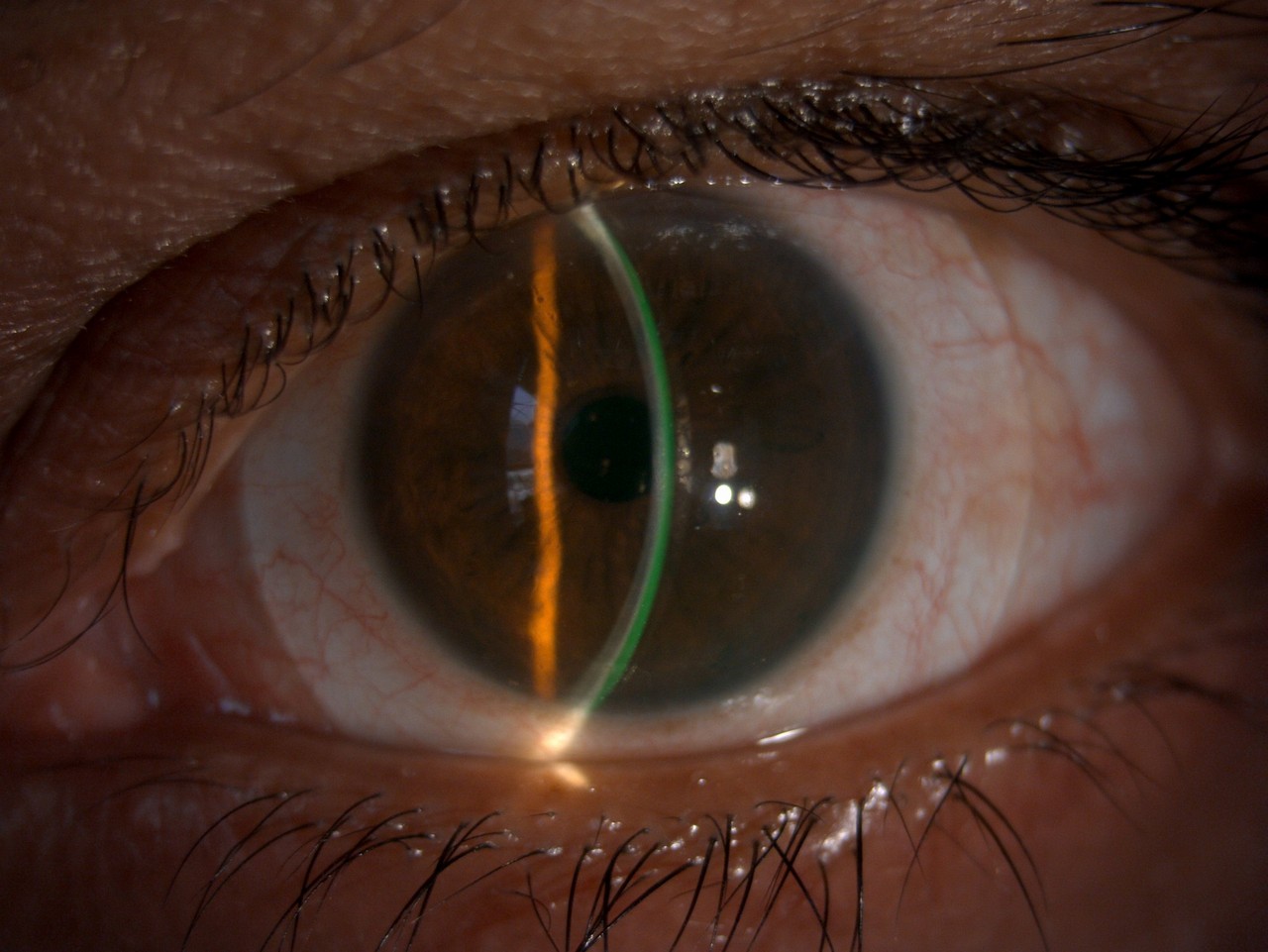
We will carry out a slit lamp examination of the cornea itself, alongside with your history and how fast the prescription has moved to check progression.
Repeat topography over time is what shows whether it is progressing, which is the question that decides whether you are referred for cross-linking.

The Lens Options
Which lens suits you depends on how irregular the cornea has become.
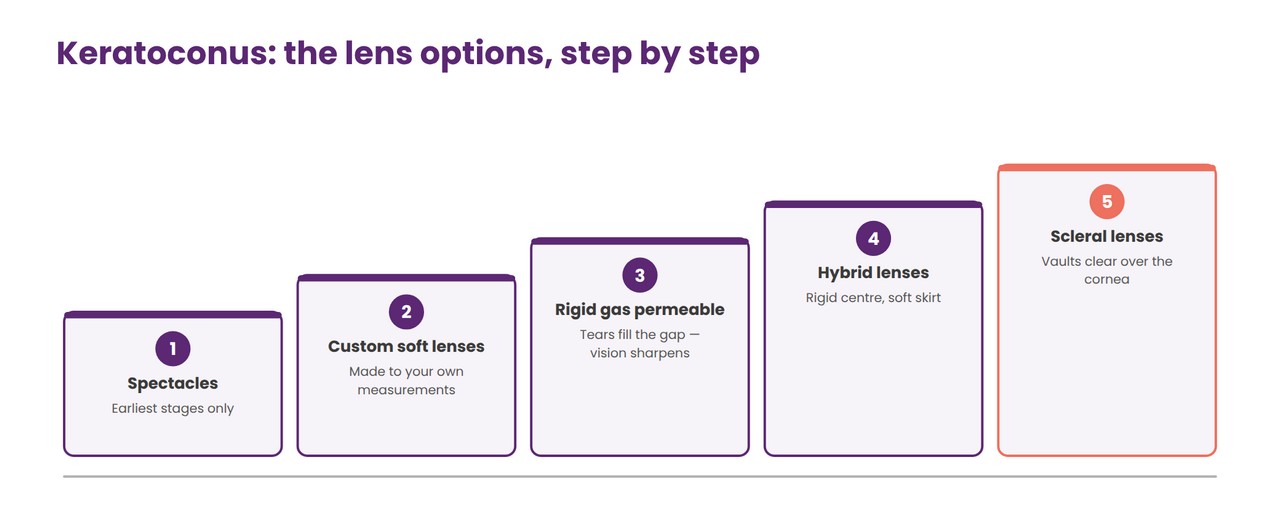
Spectacles
Adequate in the earliest stages only. Once the cornea is irregular, glasses cannot keep up.
Custom soft lenses
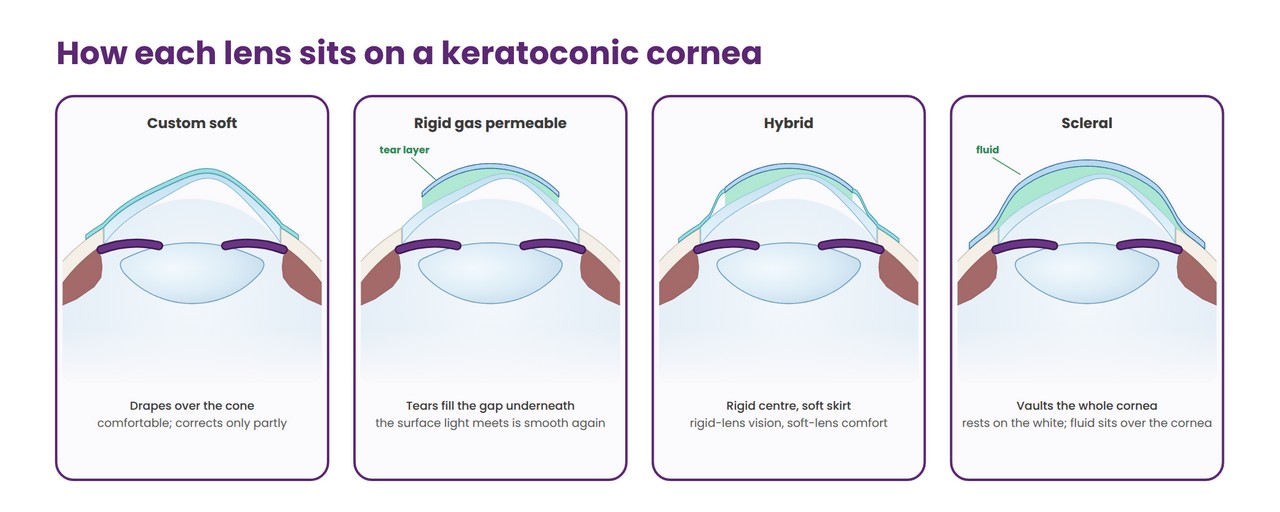
Made to your own measurements, and comfortable from day one. A good first step for mild keratoconus, and for some people the only lens they ever need.
Rigid gas permeable lenses
RGP lenses hold their own shape, so the tear film fills the gap between lens and cornea and the irregularity effectively disappears. Vision sharpens dramatically.
The trade-off is adaptation – they take time to get used to.
Hybrid lenses
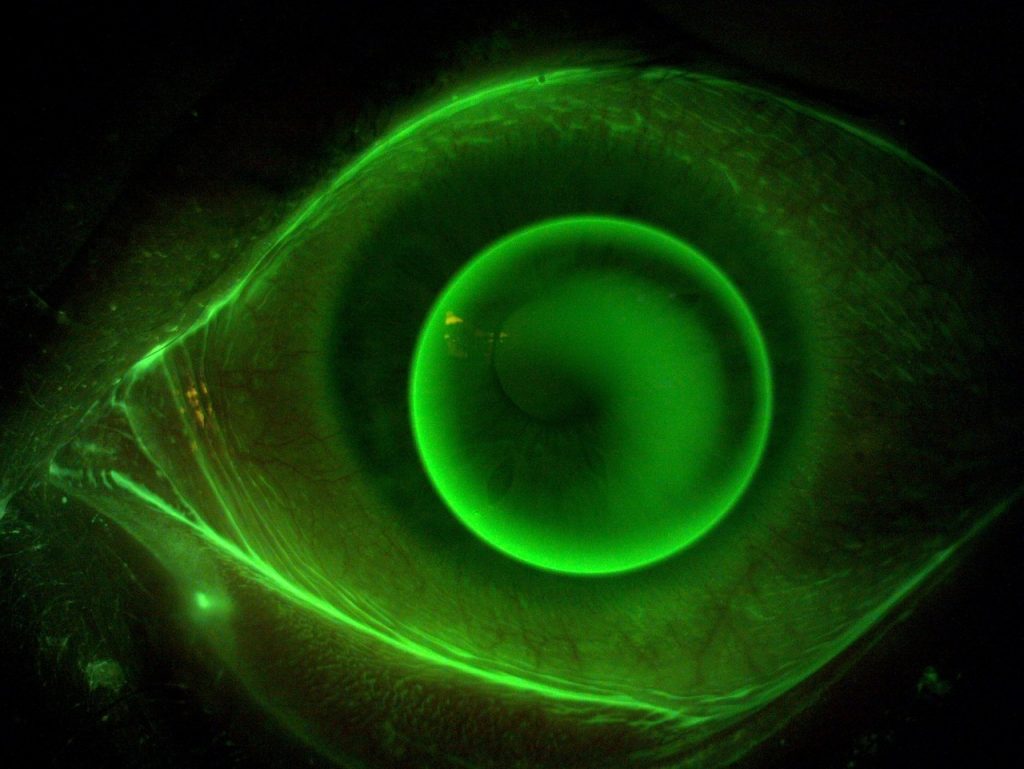
Hybrids have a rigid centre for vision and a soft skirt for comfort. They suit people who cannot tolerate a full rigid lens.
Scleral lenses
Scleral lenses vault clear over the cornea entirely and rest on the white of the eye, with a reservoir of fluid underneath.
For advanced or very irregular corneas they are often the only thing that works – and because nothing touches the cone, they are frequently more comfortable than a small rigid lens.
Cross-Linking: What It Does and Does Not Do
Corneal cross-linking strengthens the bonds within the cornea and halts progression. It is the only treatment that changes the course of the disease.
What it does not do is restore vision. The cornea stays the shape it was, so most people still need lenses afterwards.
We do not perform cross-linking. We monitor the eyes and refer you if we feel that you would benefit from cross-linking.
Corneal transplant is the last resort, and it is needed far less often than it used to be, largely because cross-linking and modern lens designs are now available.
Book a Keratoconus Assessment in Dubai
If your prescription has changed more than once in a year, or lights streak at night, it is worth having the shape of your cornea measured rather than the prescription changed again. Book an appointment, read about our specialist contact lenses and contact lens fitting, or look up a term in our optical glossary.
Frequently Asked Questions
Does keratoconus cause blindness?
Very rarely. Most people achieve good functional vision with the right contact lens. The aim is to fit a lens that restores clear sight.
Can glasses correct keratoconus?
Only in the earliest stages. Once the cornea is irregular, a spectacle lens cannot compensate for an uneven surface, and contact lenses become the answer.
Does eye rubbing cause keratoconus?
Rubbing does not cause it on its own, but it is strongly associated with it and with faster progression. It is the one risk factor you can change, treating any underlying allergy is part of that.
At what age does keratoconus start?
Usually in the teens or twenties, often progressing into the thirties before stabilising. The younger it appears, the more closely it should be monitored.
Will I need cross-linking?
Only if there are signs it is progressing. Cross-linking halts progression but does not improve vision, so lenses are usually still needed afterwards. We monitor and refer; we do not perform it.
Which contact lens is best for keratoconus?
It depends on how irregular the cornea is. Custom soft lenses suit mild cases, rigid gas permeable and hybrid lenses suit moderate ones, and scleral lenses suit advanced or very irregular corneas.