

Low Vision Assessment (LVA) in Dubai

Low Vision Assessments in Dubai at Cairns & Co
At Cairns & Co Specialist Optometry Centre, we provide comprehensive low vision assessments in Dubai for patients living with permanent or progressive vision loss. Our specialist low vision service focuses on maximising remaining sight, improving daily function for people with conditions such as macular degeneration, glaucoma and diabetic eye disease.

Early glaucoma causing peripheral vision difficulties
Understanding the cause of your vision loss
At Cairns & Co, we perform a comprehensive eye evaluation to assess the extent of your vision loss and identify any underlying eye conditions causing impaired vision, such as cataracts, age-related macular degeneration, glaucoma or diabetic retinopathy.
Each condition affects eyesight differently and understanding these causes is essential for effective management.
Low vision assessments in Dubai at Cairns & Co are longer, in-depth appointments carried out by UK-trained optometrists. We assess not only the clarity of your vision, but contrast sensitivity, reading ability, lighting needs, and real-world visual function.
The underlying eye condition will be managed by one of our partner eye hospitals, where specialist ophthalmologists will provide expert care to help control and slow the progression of vision problems. At Cairns & Co we will support you in reaching your visual potential.

Example of vision with macular degeneration

In-depth Spectacle Assessment
Stronger spectacle lenses, including high-powered glasses or contact lenses, may improve your visual acuity, especially for near vision tasks. During the assessment, you will try various lenses to determine the optimal prescription that suits your needs and helps you perform everyday tasks more easily.
Low Vision Aids and Assistive Devices
We regularly support patients with low vision related to conditions such as age-related macular degeneration, glaucoma, diabetic eye disease, inherited retinal conditions, and post-stroke visual impairment.
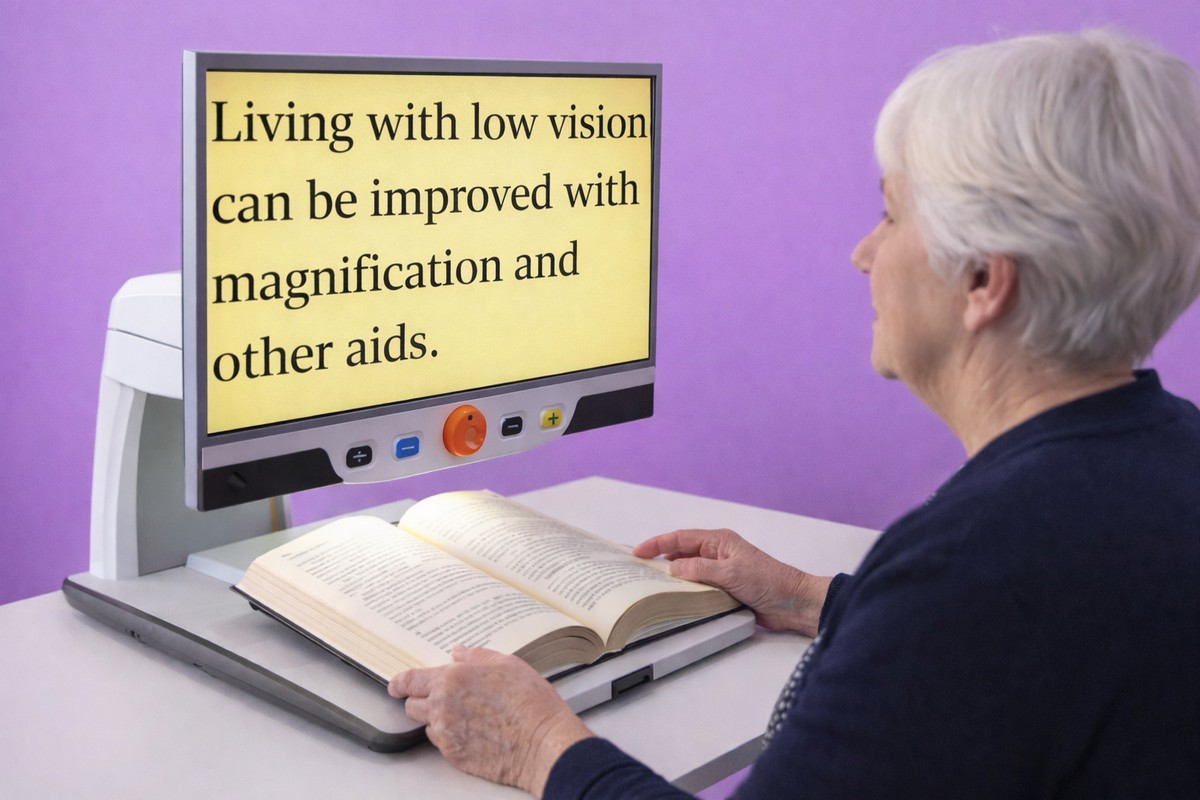
These include handheld magnifiers, electronic devices and specialised lighting solutions to improve size and contrast.

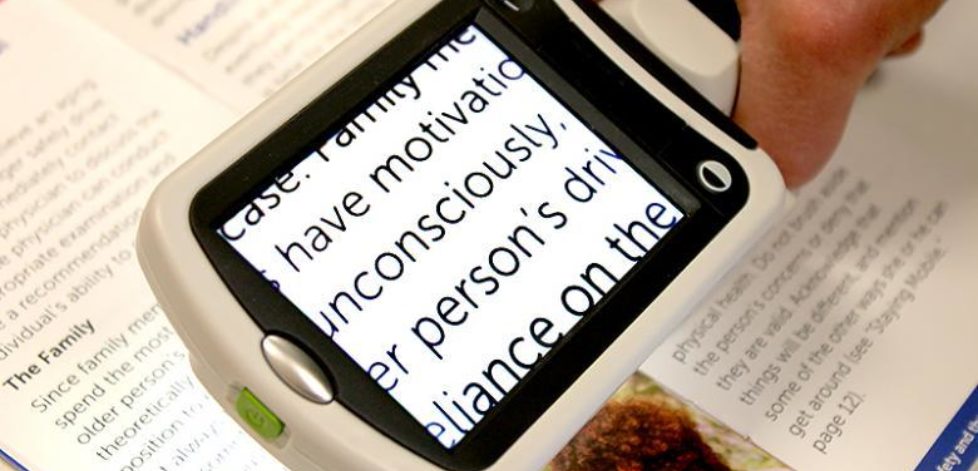
During your low vision assessment, you will have the opportunity to try these devices to determine which best enhances your ability to read, watch TV and perform other everyday activities.
We tailor each consultation to your specific needs and allocate up to 90 minutes for the appointment so we can address all your concerns and trial any devices that may be beneficial. Our goal is to provide practical low vision aids and support to improve your quality of life and maintain your independence despite visual impairment.
Why Choose Cairns & Co for Low Vision Support?
At Cairns & Co, low vision assessments are led by UK-trained optometrists with extensive experience in complex eye disease. Our clinical lead has helped hundreds of patients with reduced vision, both in the UK and in Dubai. This experience allows us to tailor practical solutions that go beyond standard eye tests.
If you or a family member are living with reduced vision, a low vision assessment at Cairns & Co may help you make the most of your remaining sight. Our team is happy to discuss whether a low vision consultation would be suitable for you.
FAQs for Low Vision Problems
1. Do you offer low vision assessments in Dubai?
Yes. Low vision assessments at Cairns & Co are provided in Dubai by UK-trained optometrists, with a focus on how you see in daily life and personalised support.
2. What is a low vision assessment, and why is it important?
A low vision assessment is a comprehensive evaluation performed by one of our UK-trained optometrists to determine the extent of vision loss and identify underlying eye conditions such as cataracts, glaucoma, diabetic retinopathy, or age-related macular degeneration.
This assessment helps tailor low vision aids and strategies to maximise your remaining vision and improve your daily life.
3. What are common causes of low vision?
Low vision can result from various eye problems, including age-related macular degeneration, cataracts, glaucoma, diabetic retinopathy, and retinitis pigmentosa. These conditions affect the retina, optic nerve, or eye lens, leading to gradual loss or distorted vision in one or both eyes.
4. Can low vision be improved with surgery or glasses?
While some eye conditions, like cataracts, can be treated with surgery, many causes of low vision cannot be fully corrected with surgery or glasses alone. However, stronger spectacle lenses, contact lenses, and specialised low vision aids can help enhance visual acuity and assist with performing everyday tasks.
5. What types of low vision aids are available?
Low vision aids include handheld magnifiers, spectacle-mounted magnifiers, electronic devices such as screen readers and electronic reading aids, and specialised lighting solutions. These aids help people with low vision read large print, watch TV, hold objects, and perform daily activities more effectively.