

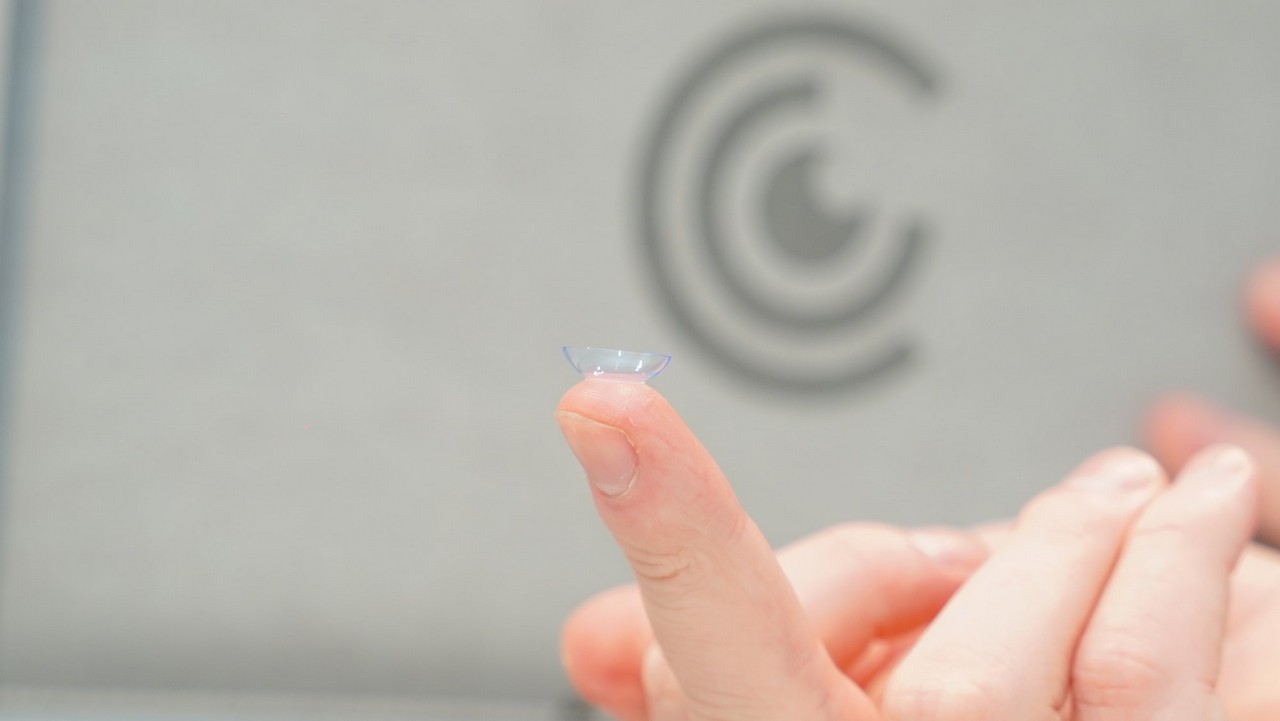
Somewhere around forty-five, your arms get too short.
The menu starts to drift further away. The phone goes to arm's length, then the font size goes up. It is called presbyopia, and it happens to everyone: the lens inside the eye stiffens with age and stops changing focus for near.
If you wear contact lenses, the question that follows is whether you now have to give them up for glasses. You do not. But the lenses you have worn since your twenties are not the ones to carry on with.
What Presbyopia Does to a Contact Lens Wearer
Your distance lenses still work. It is the near that goes.
So people start carrying reading glasses to put on over their contact lenses, which rather defeats the point of the contact lenses.
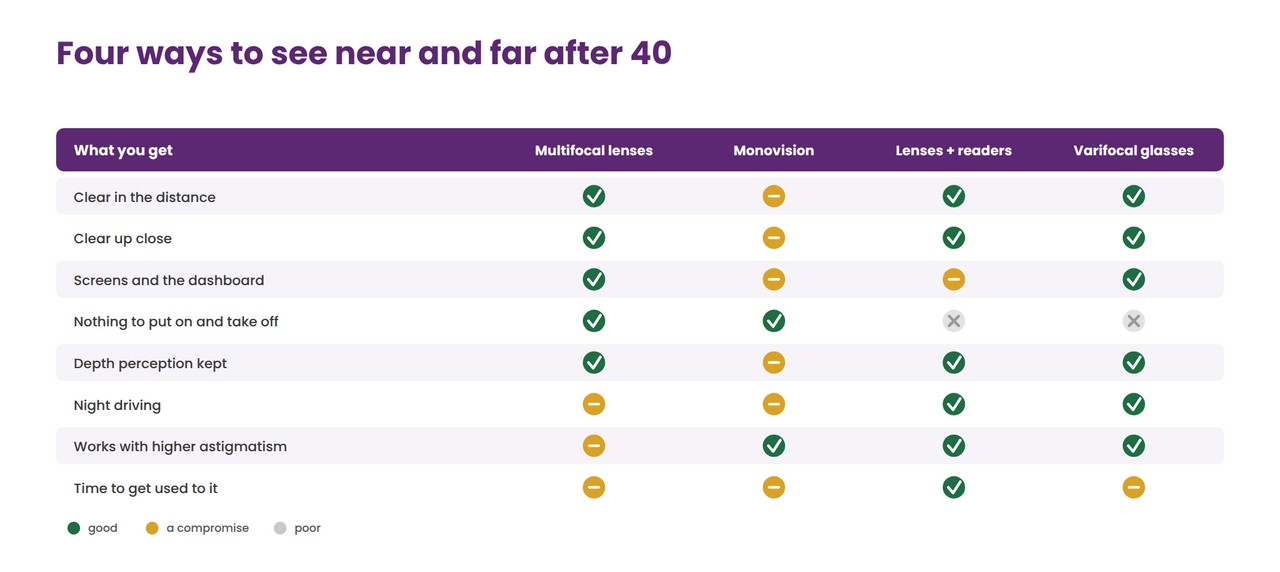
There are better answers, and they divide into two: lenses that give each eye both distances, or lenses that give each eye one.
Multifocal Contact Lenses
A multifocal lens has rings of different power across it – distance, intermediate and near – all in front of the pupil at the same time.
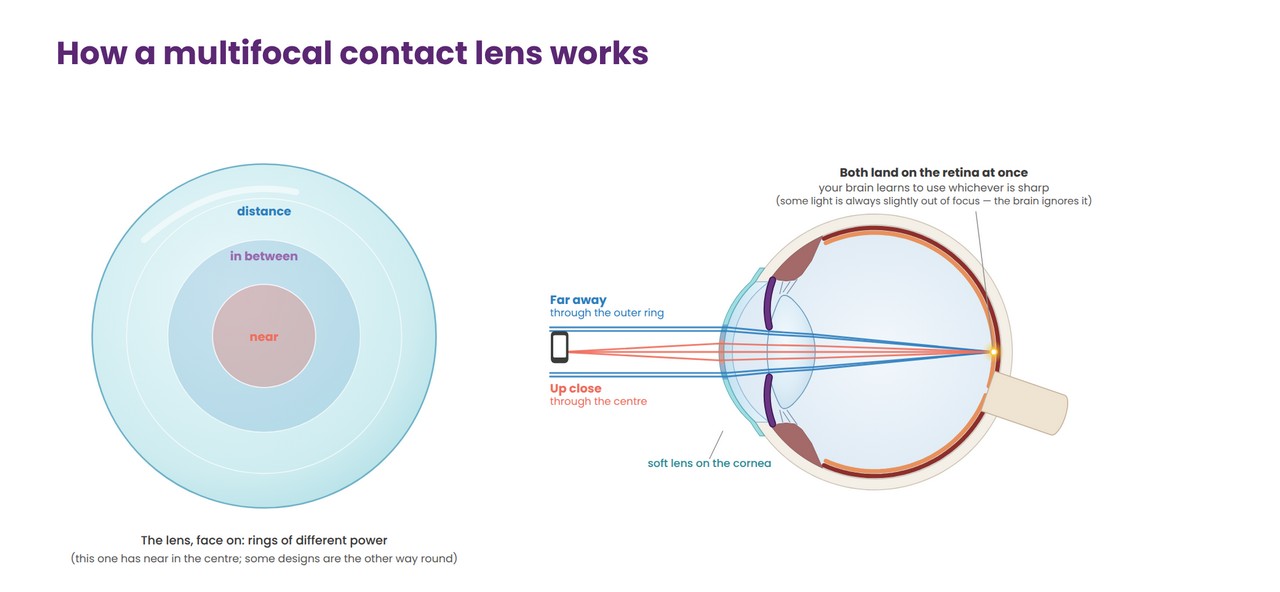
Both images reach the retina. The brain learns to pay attention to the one that is sharp and ignore the one that is not. It sounds unlikely, and it takes a few days, but most people adapt well.
They come as daily disposables and monthly lenses in standard designs, and when a standard lens does not fit or does not focus properly, custom soft lenses are made to your measurements. For people who want the sharpest possible vision, or who have astigmatism, multifocal rigid gas permeable and hybrid designs exist too.
The trade-off is contrast. Vision through a multifocal is very good rather than razor-sharp, and night driving is where some people notice it.
What is Monovision?
Monovision is simpler: one eye is corrected for distance, the other for near. This is carefully selected by determining the patient's dominant and non-dominant eye. The brain uses whichever eye has the clearer picture.
It works surprisingly well for a lot of people, particularly in the early years of presbyopia when the reading prescription is small. Each eye sees crisply, and it works with any lens type, including lenses for high astigmatism.
What you give up is a little depth perception, and a little clarity at a distance. If you drive at night for a living or play racquet sports seriously, we will tell you that before you try it.
There is a middle path as well. A multifocal in one eye and a distance lens in the other, or multifocals set slightly differently in each eye, often gets the best of both.
Which Contact Lens Suits You?
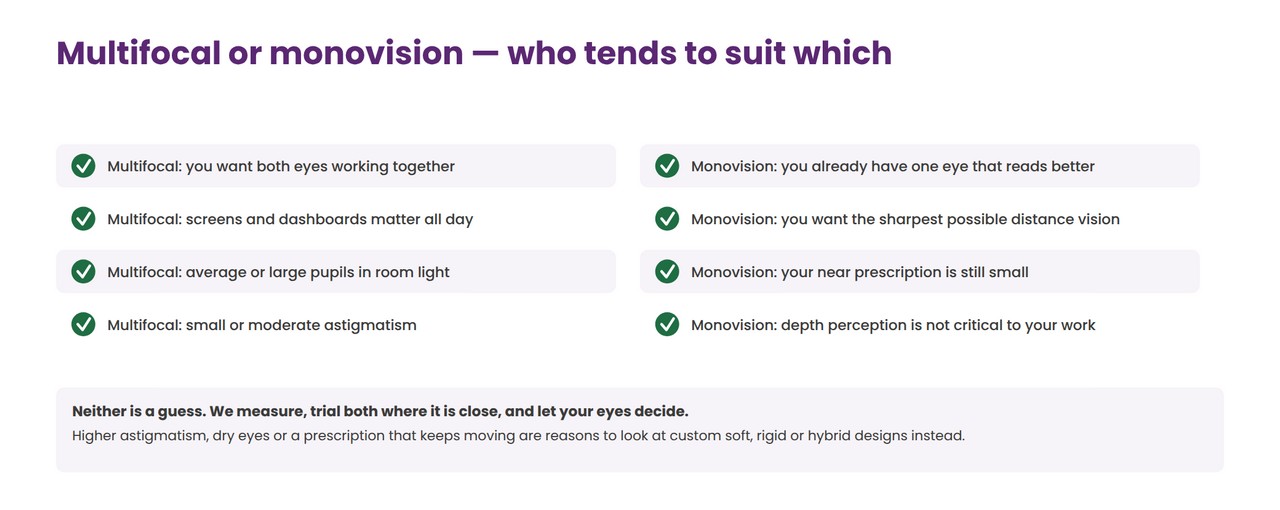
It depends on your prescription, your pupil size, how much astigmatism you have, the state of your tear film and most of all, what you do all day. A surgeon, a pilot and someone who reads for a living will not end up in the same lens.
That is why we do not hand over a trial pair without having a lens fitting appointment.
What the Contact Lens Fitting Involves
Fitting lenses for presbyopia takes longer than fitting single-vision lenses, and it should.
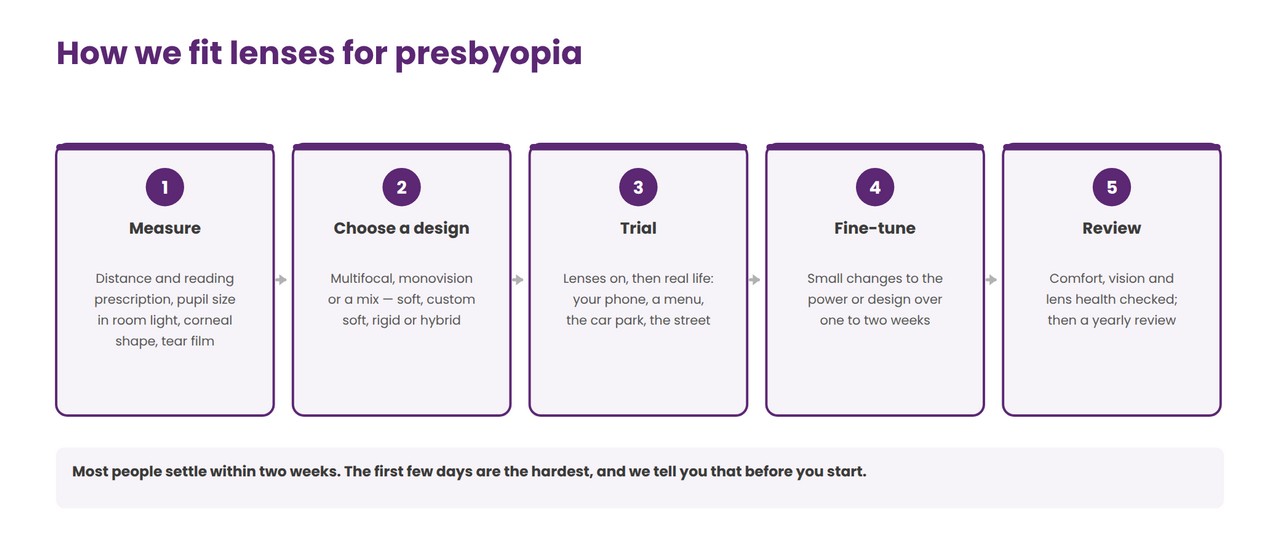
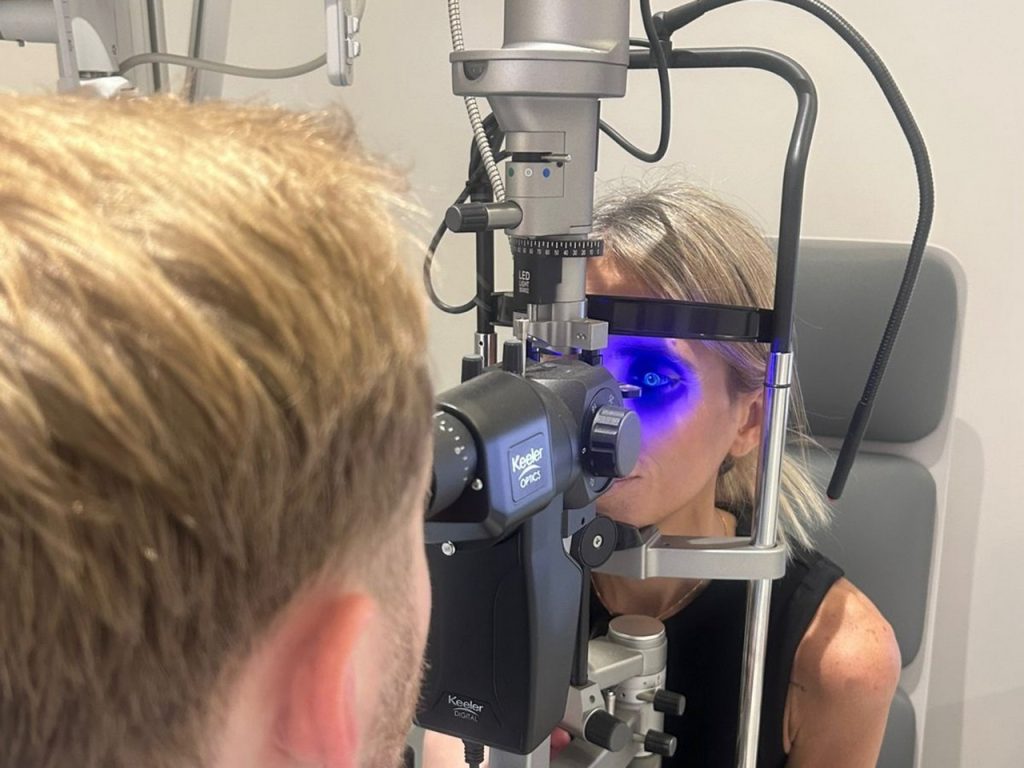
We measure the distance and reading prescription, pupil size in ordinary room light, the shape of the cornea with a topographer, and the tear film. Then we check which eye is dominant, because it decides which eye gets which lens.
Then you wear trial lenses – not sitting in the chair, but out in the real world: your phone, the car park, a menu. We adjust over one to two weeks until it is right.
Dry Eyes, Air Conditioning and Lenses After 40
The tear film changes with age too, and Dubai's air conditioning does it no favours. Lenses that were comfortable at thirty can feel dry at fifty.
Daily disposables help, because every day starts with a fresh lens. Modern materials hold moisture better. And where the eyes are genuinely dry, treating the dry eye properly comes first – it is the difference between lenses that work and lenses that end up in a drawer.
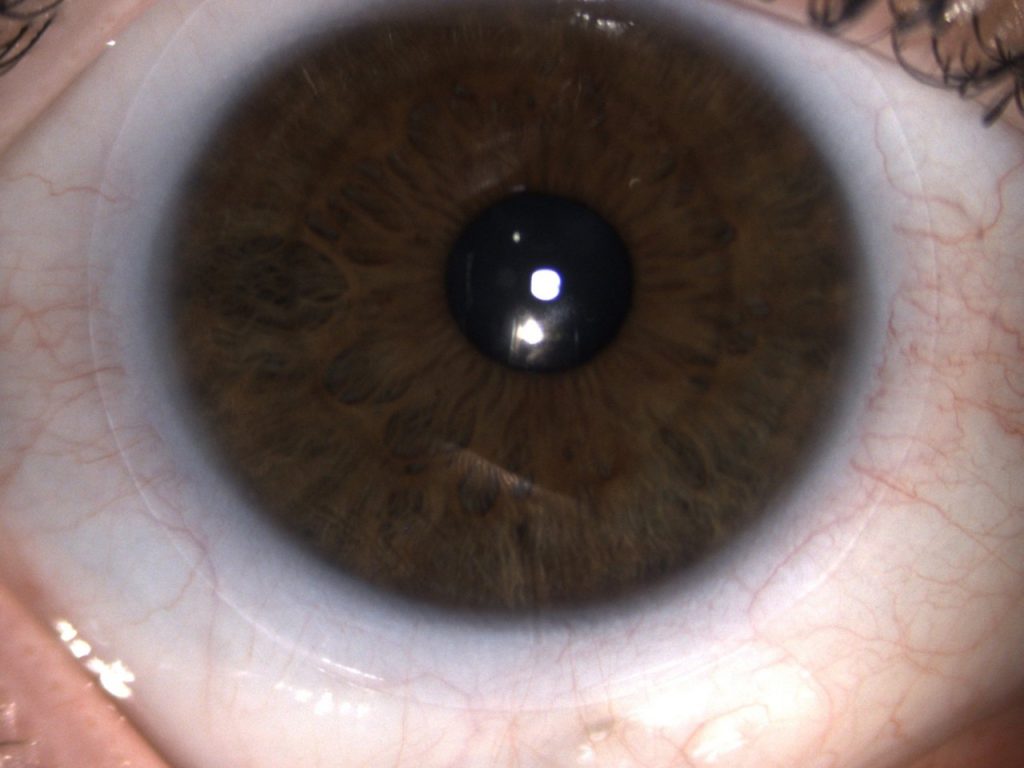
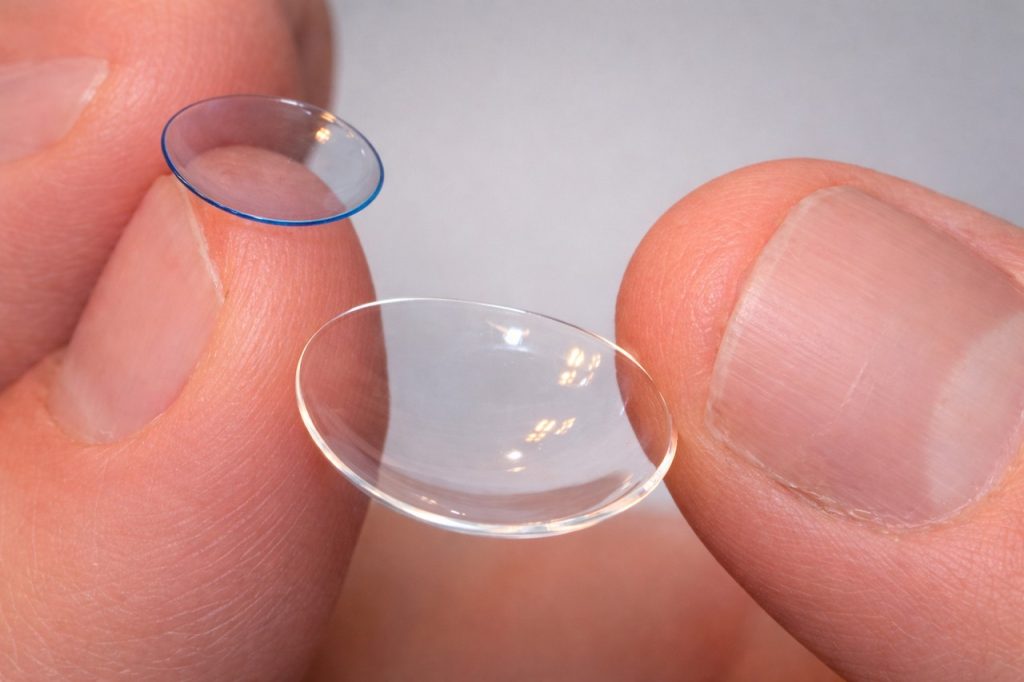
For people with severely dry eyes who still want to be free of glasses, scleral lenses, which sit over a reservoir of fluid, are an option few people know exists.
Book a Contact Lens Assessment in Dubai
If reading glasses over your contact lenses have become the routine, there is a better arrangement. Book an appointment, read about our contact lens fitting and specialist contact lenses, or look up a term in our optical glossary.
Frequently Asked Questions
Can I still wear contact lenses after 40?
Yes. Presbyopia changes which lens suits you, not whether you can wear one. Multifocal lenses, monovision and custom designs all keep people out of reading glasses.
Do multifocal contact lenses really work?
For most people, yes, after a few days of adaptation. Vision is very good rather than razor-sharp, and the fit has to be right: pupil size and the design chosen matter more than with single-vision lenses.
What is monovision?
One eye is corrected for distance, and the other for near, and the brain uses whichever is clearer. It suits many people in early presbyopia, at the cost of a little depth perception.
Can I get multifocal contact lenses if I have astigmatism?
Yes. Multifocal soft lenses for astigmatism exist in standard and custom forms. In addition, rigid gas permeable and hybrid multifocals correct astigmatism particularly well.
Are daily disposable multifocal lenses available?
Yes, in several designs. They are often the most comfortable choice after 40, because a fresh lens every day suits a drier tear film.
Will I still need reading glasses?
Occasionally, for very small print in dim light. The aim is to manage almost everything without them, not to promise you will never pick up a pair again.