


As we move through life, our eyes naturally change alongside the rest of our body. One of the most common vision changes adults experience is presbyopia, a gradual reduction in the eye’s ability to focus on close objects.
While many people first notice it when reading a menu, checking messages on their phone, or working on a computer, presbyopia is a normal part of ageing and not a sign that something is wrong with your eyes.
Clear and comfortable vision plays an important role in maintaining productivity and enjoying everyday activities. The good news is that presbyopia can be effectively managed with a range of modern vision correction options tailored to your lifestyle.
What Is Presbyopia?
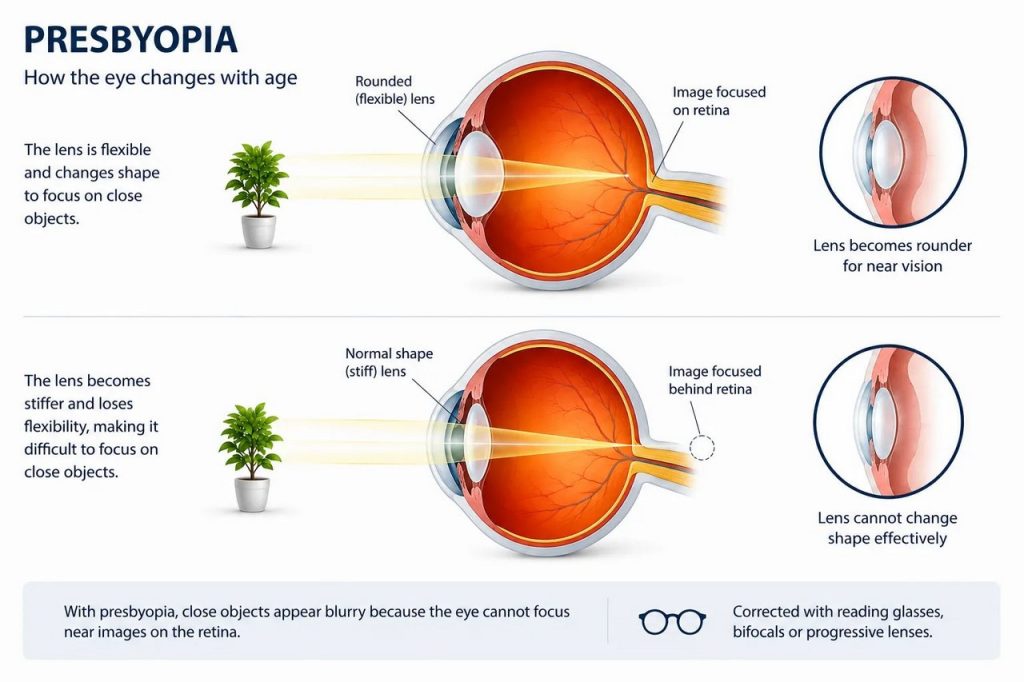
Presbyopia is an age-related change that affects the eye’s natural lens. When we are younger, the lens is flexible and easily changes shape to focus on objects at different distances.
As we get older, the lens gradually becomes less flexible, making it more difficult to focus on close tasks.
Most people begin to notice symptoms between the ages of 40 and 45, although the exact timing varies from person to person.

Common signs of presbyopia include:
- Blurred near vision resulting in difficulty reading small print
- Holding reading material further away
- Eye strain and headaches after prolonged reading
- Increased reliance on brighter lighting when reading
Presbyopia affects everyone eventually, regardless of whether they have previously enjoyed perfect vision or already wear spectacles or contact lenses.
Why Does Presbyopia Occur?
The eye contains a clear natural lens located behind the iris. This lens changes shape throughout the day to help us focus on objects at varying distances.
Over time, the proteins within the lens become denser and the lens loses some of its flexibility. As a result, the eye has to work harder to focus on nearby objects.
Unlike short-sightedness, long-sightedness, or astigmatism, presbyopia is not caused by the shape of the eye. Instead, it is a normal physiological change that happens within the lens itself.
How Is Presbyopia Diagnosed?
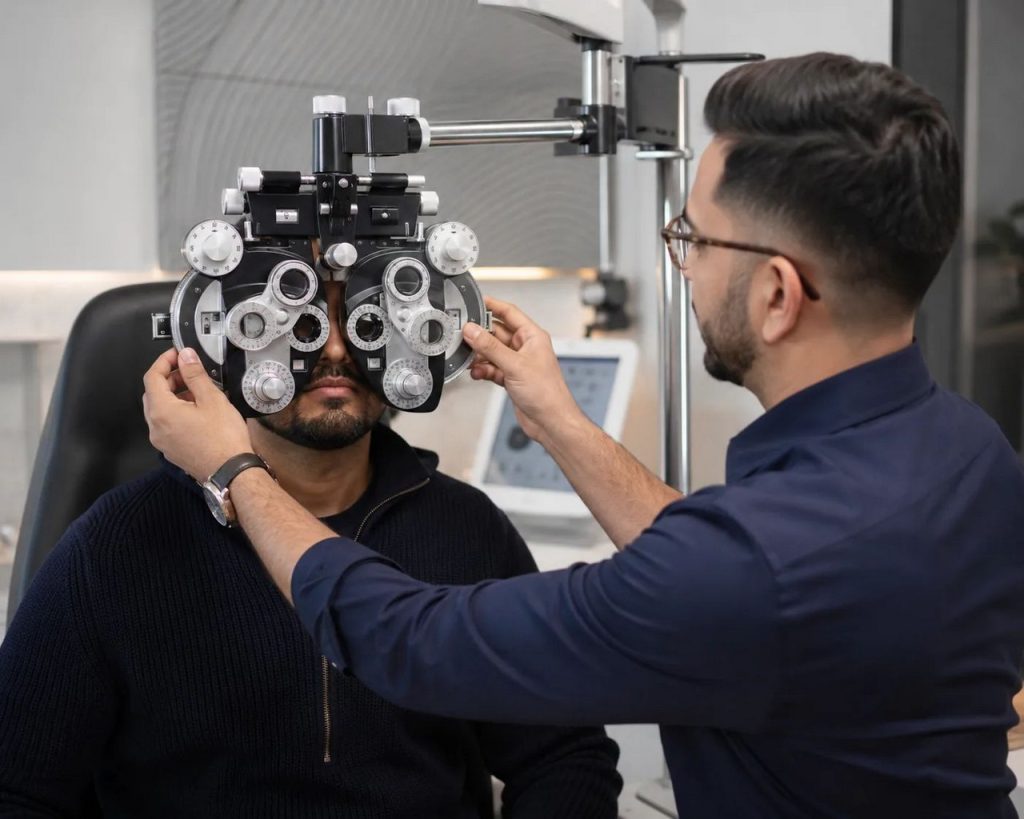
A comprehensive eye exam is the most effective way to diagnose presbyopia and assess your overall vision health.
At Cairns & Co, we take a personalised approach to eye care in Dubai, ensuring that every
What Are the Treatment Options for Presbyopia?
Reading Glasses
Reading glasses provide clear vision for close tasks such as reading, using a smartphone, or completing detailed work.
Progressive Lenses
Progressive lenses offer seamless vision correction across multiple distances, allowing patients to see clearly at near, intermediate, and far distances without changing spectacles.
At Cairns & Co we fit ZEISS ClearMind progressive lenses, designed to make the transition between distances feel more natural, particularly for patients new to progressives.
It is worth to note that bifocal lenses are another option to correct presbyopia by correcting distance and near vision with the addition of a segment onto the lens.
Occupational Lenses
These lenses are specifically designed for office environments and prolonged computer use. We usually would recommend these lenses to individuals who use a screen for more than four hours a day. The lens design offers a wider intermediate zone compared to a progressive lens which has a limited corridor field of view, at the cost of restricted distance vision.
Contact Lenses
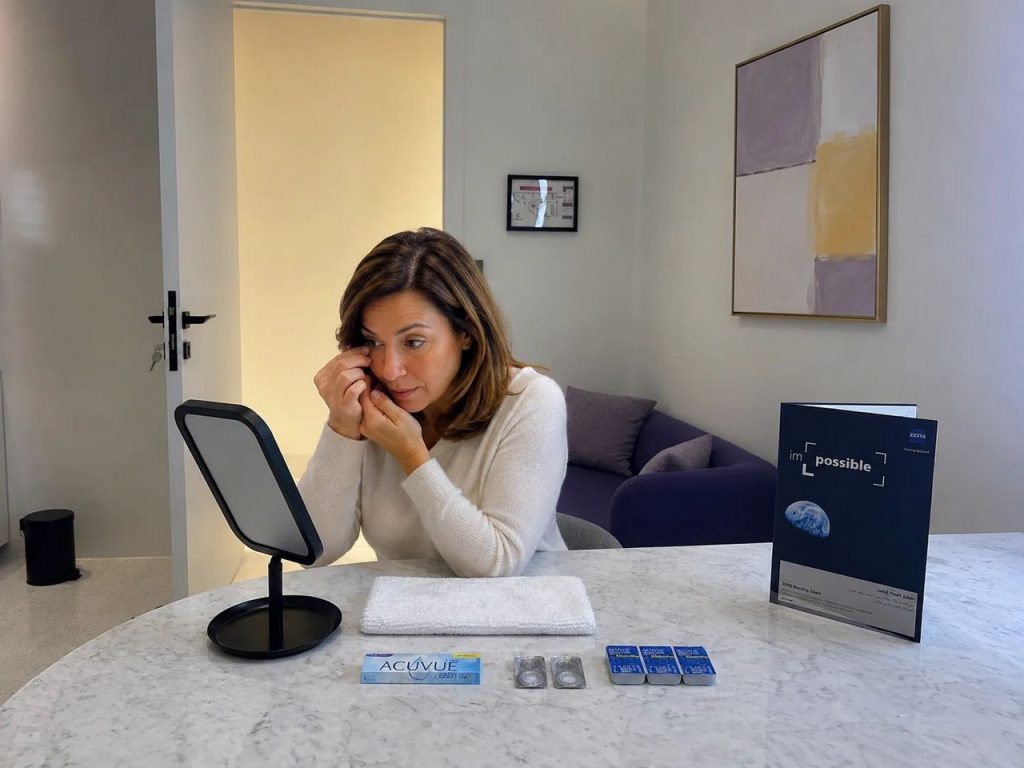
Many patients are surprised to learn that contact lenses can be an excellent option for presbyopia.
Specialist multifocal contact lenses provide vision correction across multiple distances and can be customised to suit individual visual demands.
Patients can also be fitted with monovision contact lenses to correct the dominant eye for distance and the non-dominant eye for near, aiming to provide functional vision at multiple distances.
At Cairns & Co, our optometrists regularly fit specialist contact lenses for patients seeking a convenient alternative to spectacles.
<h3>Other Treatment Options for Presbyopia<h3>
Alongside glasses and contact lenses, other options for managing presbyopia can include, surgical procedures such as refractive lens exchange (RLE) and multifocal intraocular lenses (IOLs). These options are not suitable for everyone, but where appropriate, your optometrist can discuss them with you and refer you to an ophthalmologist for further assessment.
Presbyopia Does Not Mean Compromising Your Lifestyle
One of the biggest misconceptions about presbyopia is that it limits what you can do.
Modern lens technology provides highly personalised solutions that allow patients to continue working, driving, reading, and enjoying their favourite activities with confidence.
Whether you prefer spectacles, contact lenses, or a combination of both, there are options available to help you maintain clear and comfortable vision throughout the day.
Final Thoughts
Presbyopia is a natural part of ageing, but it does not have to limit your quality of life.
With regular eye examinations, personalised advice, and the right vision correction solution, most people continue to enjoy excellent visual comfort for many years.
At Cairns & Co, we believe that exceptional eye care starts with understanding the unique visual needs of each patient.
Through comprehensive eye exams, specialist contact lens fitting, and personalised recommendations, we help our patients maintain healthy vision at every stage of life.
Book an Appointment
If you’d like tailored advice or a comprehensive eye exam, visit Cairns & Co in Dubai or book online. Our UK-trained optometrists are here to help you see clearly and comfortably.
Frequently Asked Questions
Q. What age does presbyopia usually start?
A. Most people begin noticing symptoms of presbyopia between the ages of 40 and 45, although this can vary slightly between individuals.
Q. Can presbyopia be prevented?
A. Presbyopia is a natural ageing process and cannot be prevented. However, regular eye examinations can help ensure that your vision remains clear and comfortable.
Q. Are contact lenses available for presbyopia?
A. Yes. Multifocal contact lenses are designed specifically for presbyopia and can provide clear vision at multiple distances.
Q. Is presbyopia the same as long-sightedness?
A. No. Long-sightedness is a refractive error related to the shape of the eye, while presbyopia is an age-related reduction in the eye's focusing ability.