

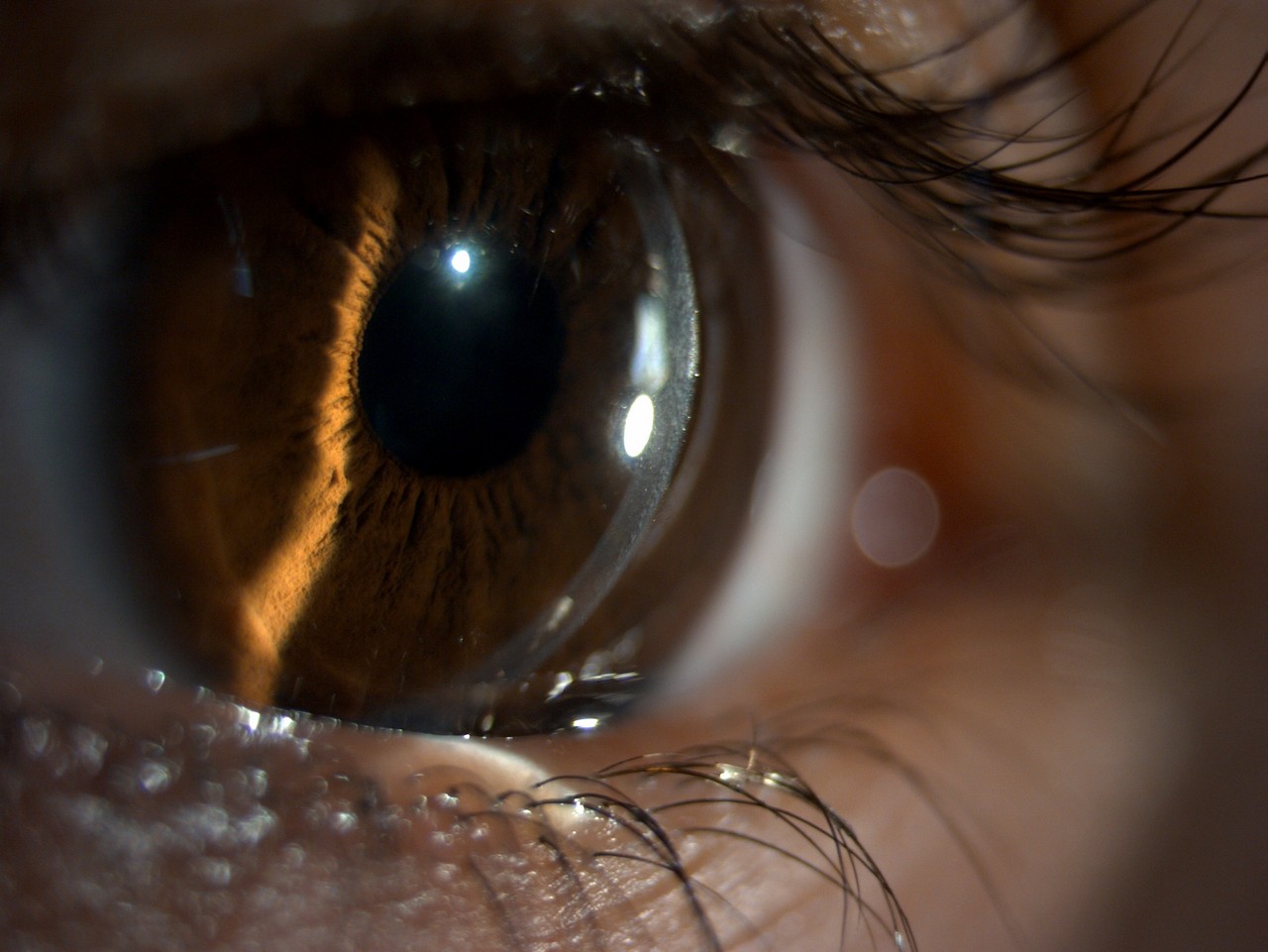
“You have the beginnings of a cataract” is one of the most alarming sentences an optometrist says, and one of the least urgent.
For most people, almost nothing changes for years.
But it is worth knowing what has been found, what will be watched, and what would eventually make surgery worth having. The decision, when it comes, is yours — and it is not an emergency
What is a Cataract?
There is a lens inside your eye, just behind the coloured iris. When you are young, it is completely clear.
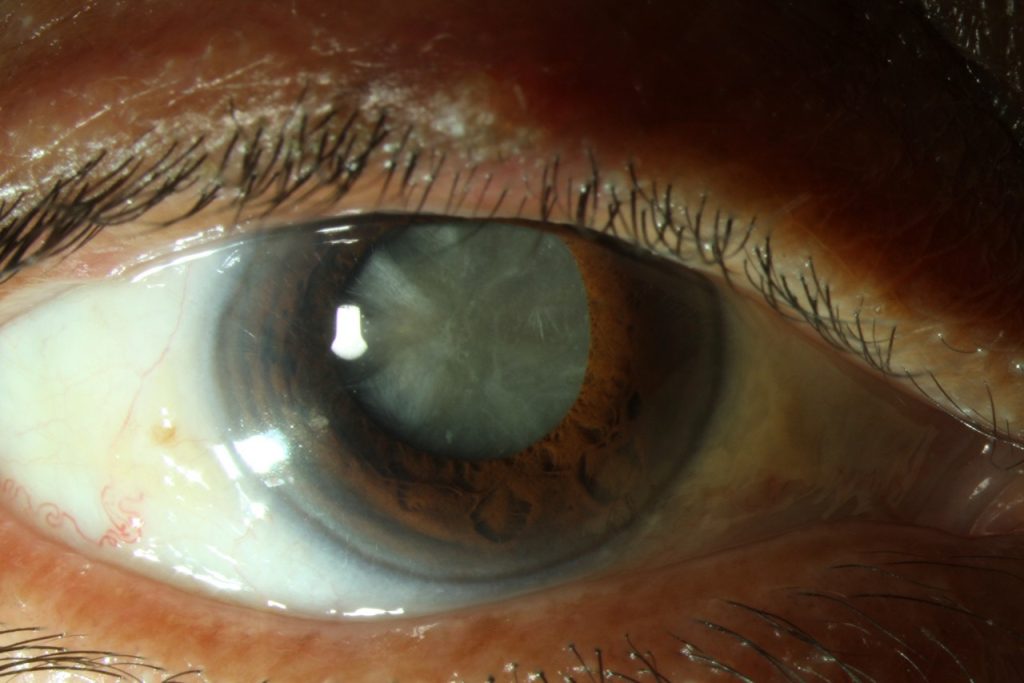
Over decades, the proteins in it change. It becomes denser, then faintly yellow, then cloudy. Light passing through no longer comes to one sharp point – it scatters.
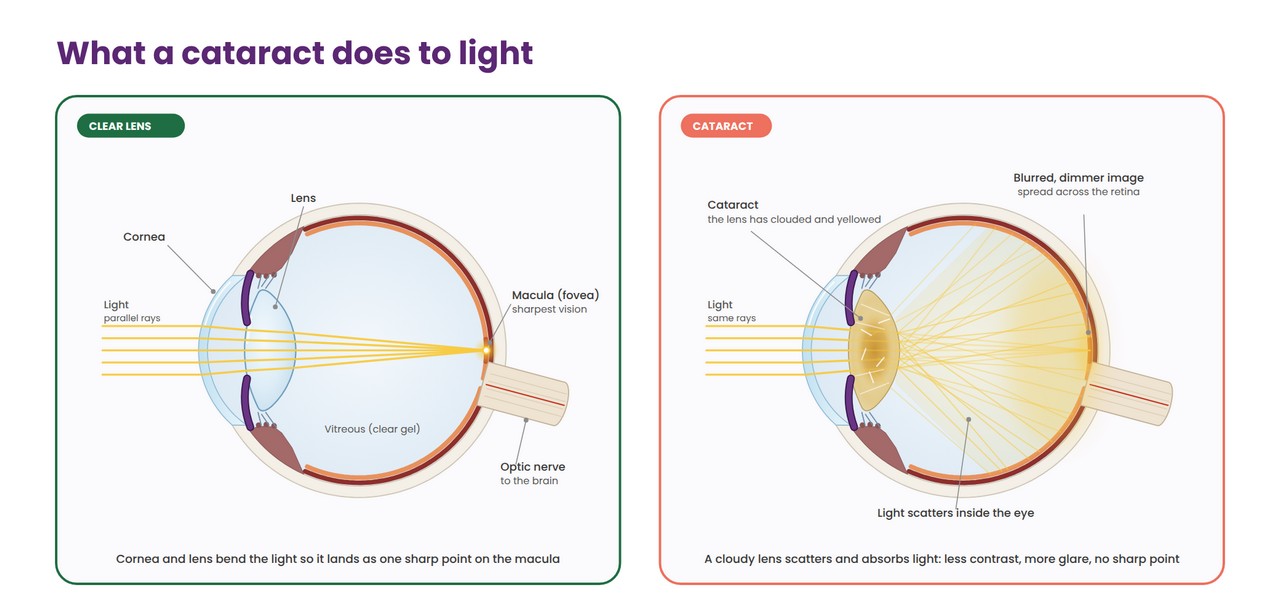
This is normal ageing, not a disease you catch. By seventy, most people have some lens clouding.
It only earns the word “cataract” when it starts to make your vision difficult.
What is the main cause of cataracts? (signs)
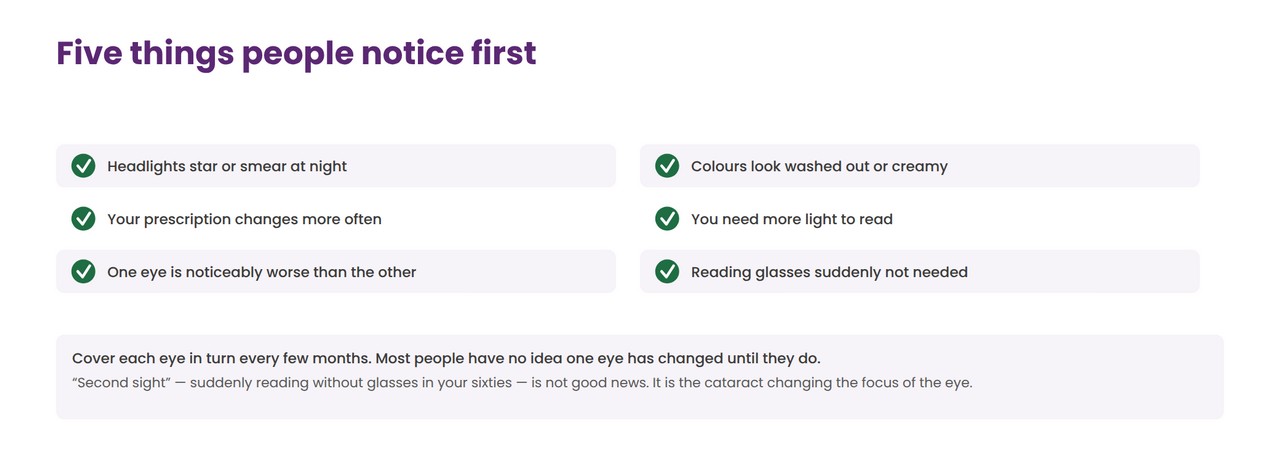
Cataracts rarely announce themselves as blurred vision. The first complaints are more specific than that.
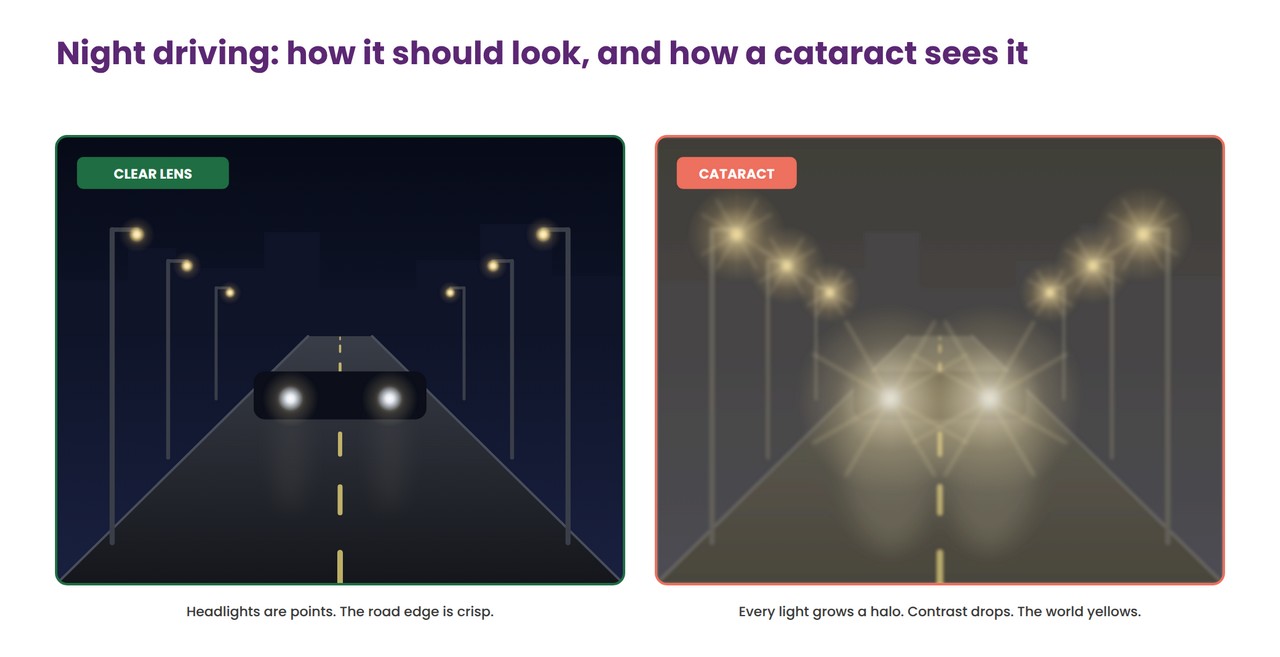
Glare and haloes at night
Usually the very first thing. Headlights star or smear, streetlights grow haloes, night driving becomes tiring.
It is worse in the dark because the pupil is larger and more of the cloudy lens is in use.
Colours looking washed out
A yellowing lens filters blue light. Whites look creamy, blues look grey.
Most people never notice until they have one eye done and compare the two.
Your prescription changing more often
A denser lens is a stronger lens. Short-sighted people often find their prescription creeping up.
Long-sighted people sometimes find they can read without glasses again. That is sometimes called “second sight”, and it is not good news — it is the cataract changing the focus of the eye.
How We Check for a Cataract
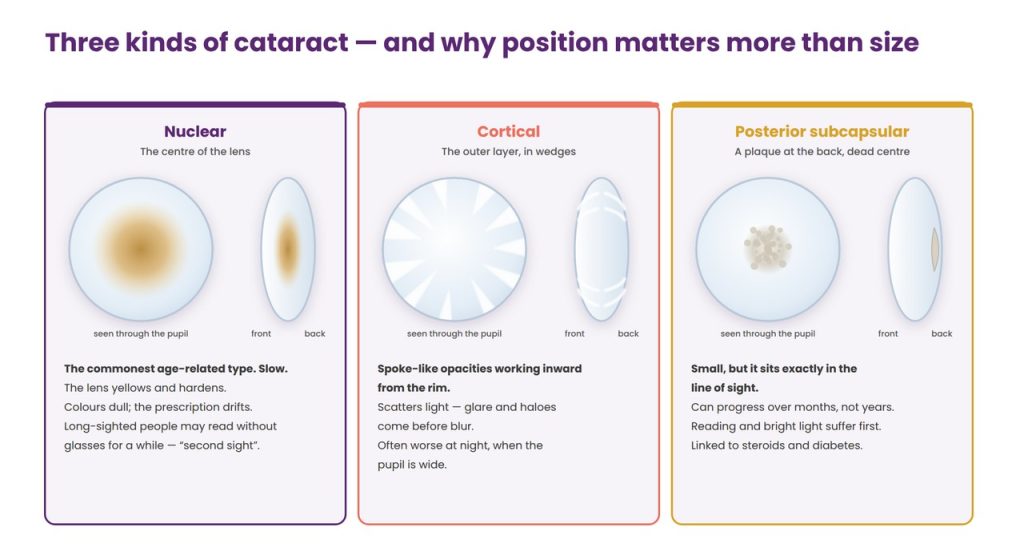
A cataract is found at the slit lamp — a microscope with a bright, narrow beam that effectively slices through the lens with light.
Where the clouding sits matters as much as how much there is. A small cataract directly behind the pupil causes far more trouble than a larger one at the edge of the lens. That is why two people with “the same” cataract can have completely different symptoms.
A full eye examination also measures how much vision you have actually lost and rules out the other things that cause similar symptoms – glaucoma and macular problems can sit quietly behind a cataract.
What Happens Next: Monitoring
This is the part most people are never told, and the most reassuring part of the story.
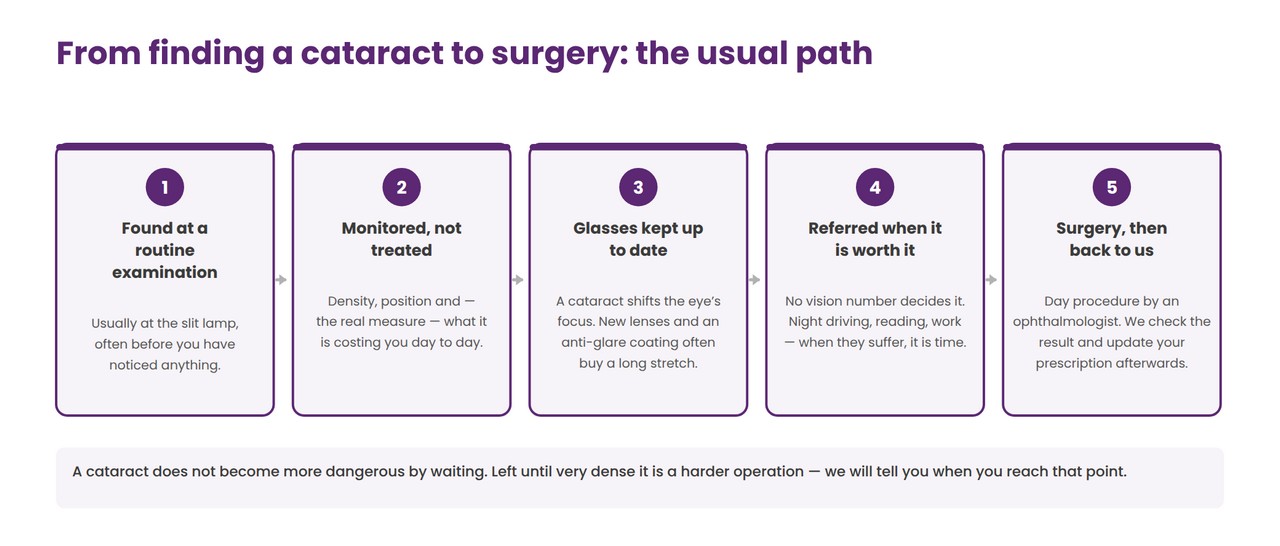
An early cataract is monitored, not treated. At each visit we record how dense it is, where it sits, and – the important measure – how much it’s affecting your visual potential.
An updated prescription often does more than people expect. Because the cataract changes the focusing power of the eye, new glasses can restore comfortable vision for a long stretch. Good anti-reflection coatings help with night glare.
When Surgery Is Genuinely Worth Having for Cataract
There is no vision number that triggers cataract surgery, whatever you may have been told.
The threshold is functional: it is worth removing when it stops you doing something you want to do.
The honest questions are these. Have you stopped driving at night? Are you avoiding reading because it is too much effort? Has your work become harder? Has a new pair of glasses stopped helping?
If the answer to several is yes, it is time. If not, there is no benefit to rushing – a cataract does not become more dangerous by waiting.
One exception. A cataract left until it is very dense is a harder operation with a slightly higher complication rate. We will tell you when you have reached that point.
What Does Cataract Surgery Involve?
We do not perform cataract surgery. We refer you – and it helps to know what you are being referred for.
The clouded lens is removed and replaced with a clear artificial one. It is a day procedure, usually under local anaesthetic, usually well under half an hour per eye, with the two eyes done a few weeks apart.
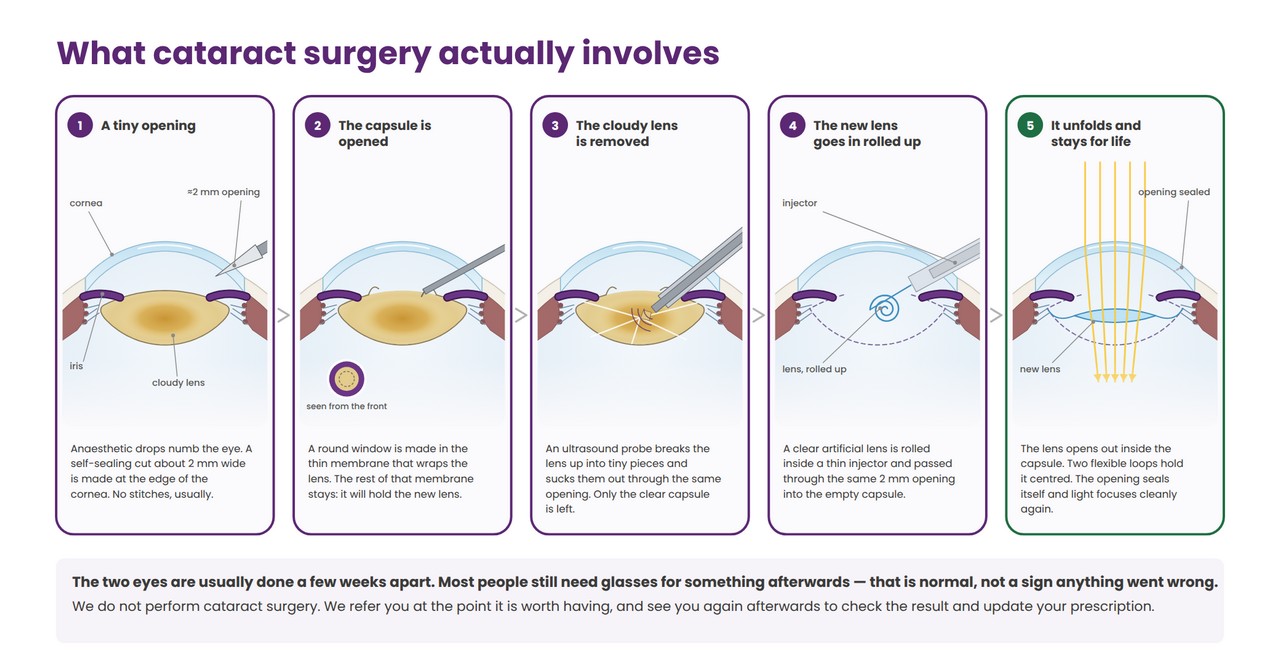
Afterwards we see you again to check the result and give you an accurate prescription once the eye has settled.
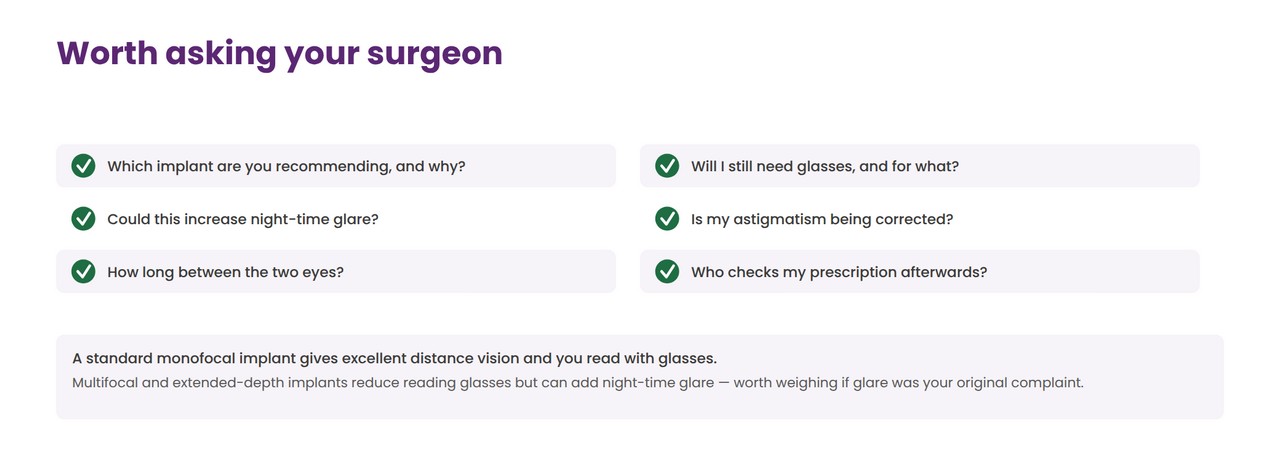
People are often surprised they still need glasses for something. That is normal, and not a sign anything went wrong.
Can You Slow a Cataract Down?
Not reliably. Be sceptical of anything sold on that promise – there are no drops, supplements or exercises with good evidence behind them.
What does have evidence is reducing what speeds them up. Ultraviolet light is the main one, which matters in this climate – sunglasses with proper UV protection are worth wearing, and worth wearing from childhood.
Smoking accelerates cataract formation. So does poorly controlled diabetes, and long-term steroid medication.
None of that will stop a cataract. It may buy you years.
Book an Eye Examination in Dubai
If night driving has become uncomfortable, or your prescription has changed twice in two years, it is worth a proper look. Book an eye examination, read what your examination involves, or browse our optical glossary. If you wear contact lenses, bring them — cataract changes affect lens prescriptions too.
Frequently Asked Questions
Q. Can a cataract be cured without surgery?
A. No. No medication, drop or supplement reverses a cataract. Until it affects daily life, updated glasses and good lighting are sensible management; after that, surgery is the only treatment.
Q. How quickly do cataracts get worse?
A. Usually very slowly — years rather than months. Cataracts related to diabetes, steroid use or injury can progress faster.
Q. Is a cataract dangerous if I leave it?
A. Not in the short term. Waiting does not damage the eye, and the operation is no less successful for it. A cataract left until extremely dense is a harder operation, so it should not be ignored indefinitely.
Q. Do I need an ophthalmologist or an optometrist?
A. An optometrist finds it, measures what it is costing you, monitors it and keeps your glasses right. An ophthalmologist operates. We refer at the point surgery is worth having, and see you afterwards.
Q. Will I still need glasses after surgery?
A. Usually, for something. A standard implant gives good distance vision, and you read with glasses. Premium implants reduce that but can bring more night glare.
Q. Can cataracts come back?
A. The cataract itself cannot. Some people develop clouding of the membrane holding the implant months or years later. It causes the same haze and is cleared in minutes with a laser at an ophthalmologist’s clinic.